Nepal grows Arabica coffee on the south-facing slopes of the mid-hills — Gulmi, Syangja, Kaski, Kavre — at altitudes between 1,000 and 1,600 metres. The combination of Himalayan altitude, monsoon rain, and slow ripening gives Nepali coffee a distinctly bright, clean cup profile that roasters inside the country have only recently begun to showcase properly. This page collects the best Nepali coffee the Avendi catalogue carries, in beans, grinds, and drip-bag formats.
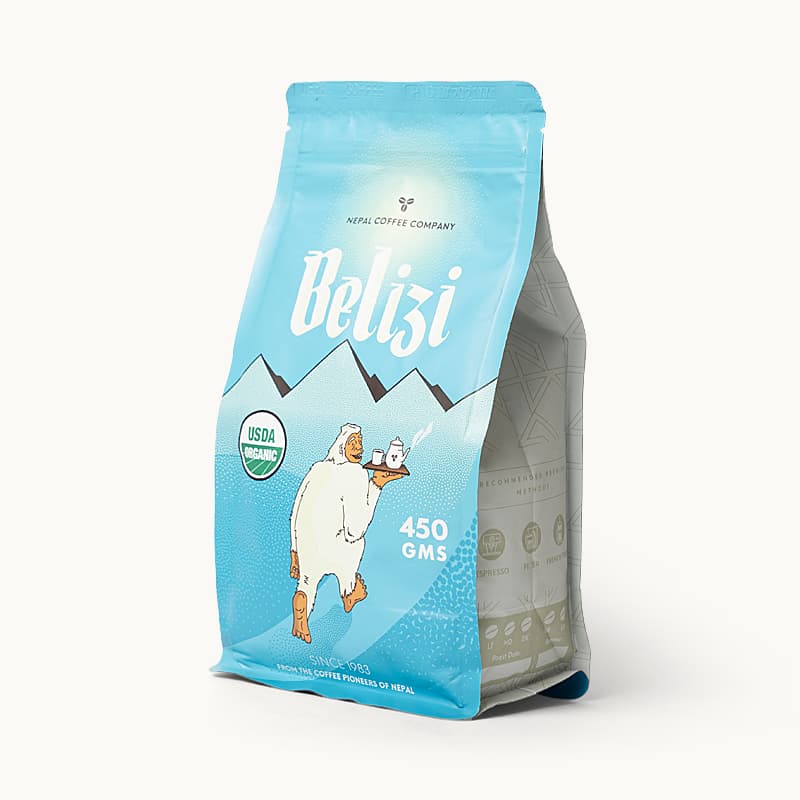
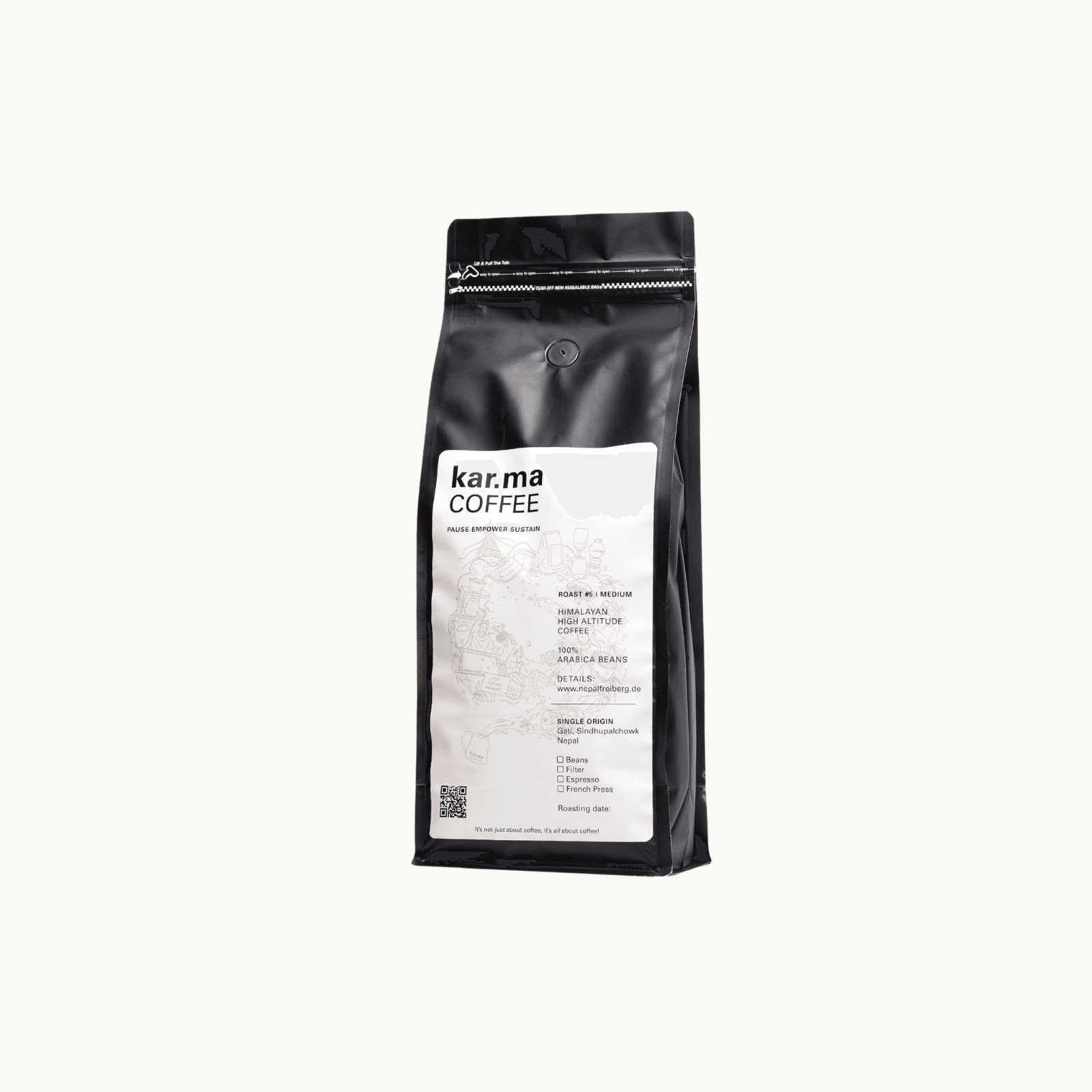
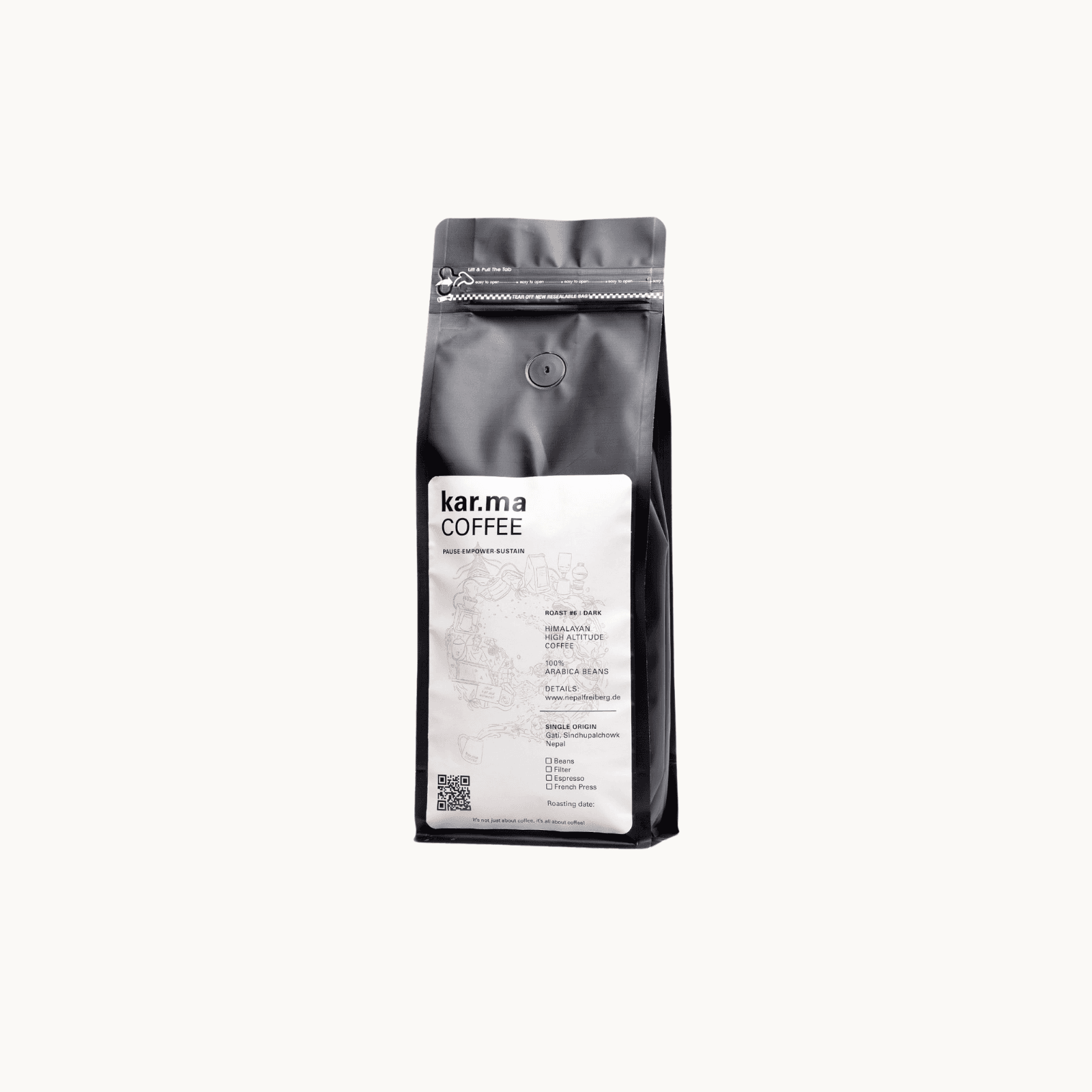
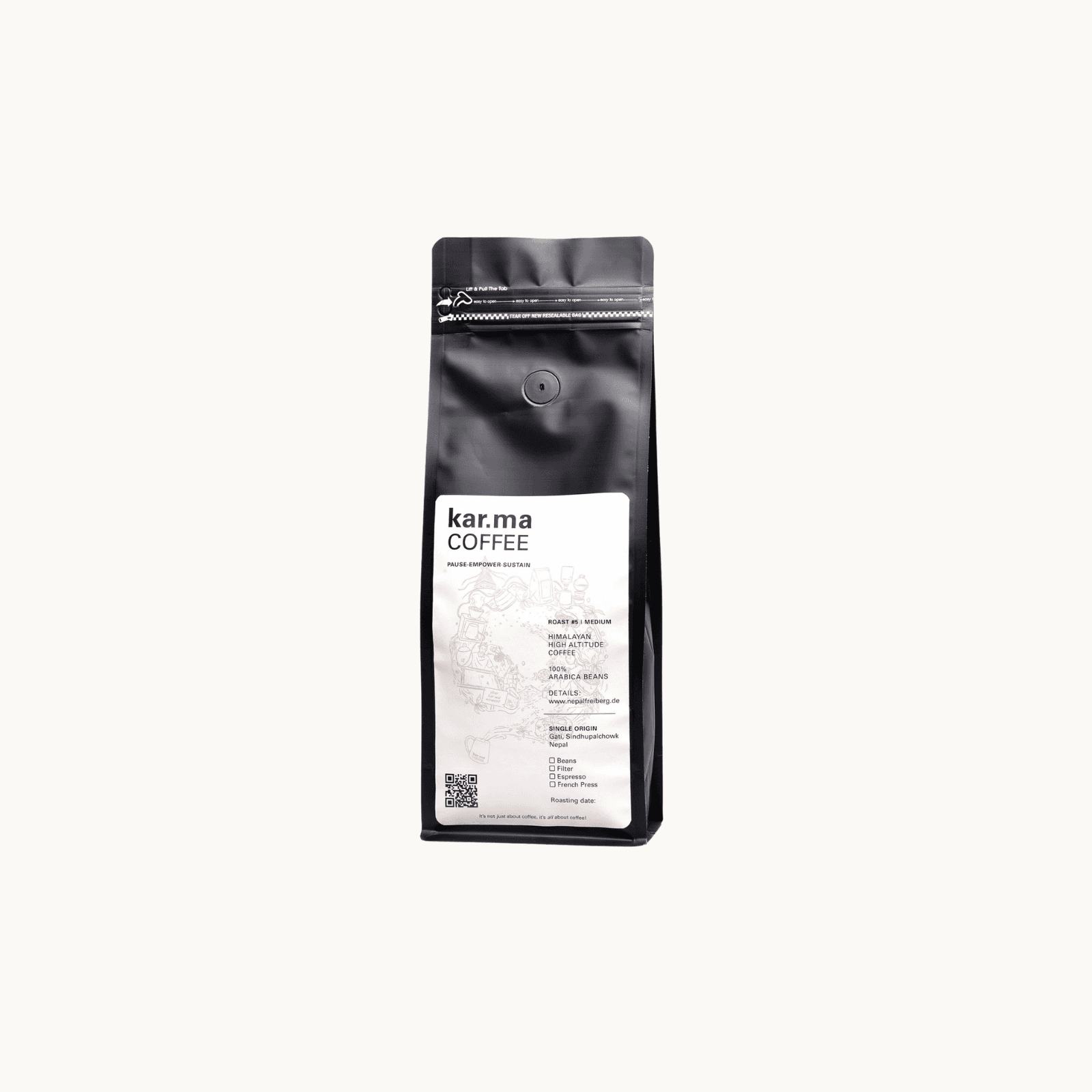
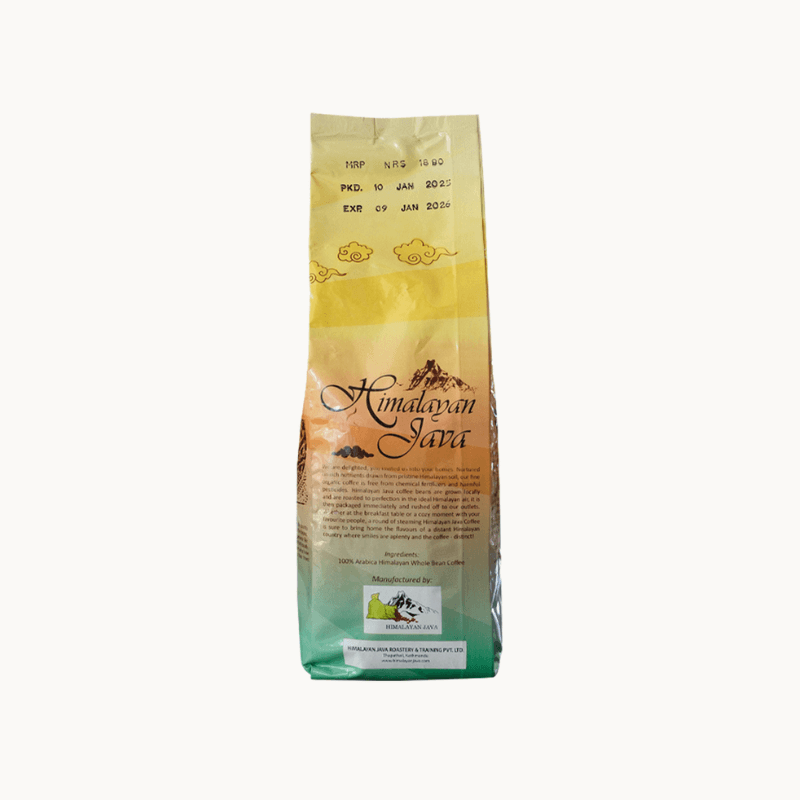
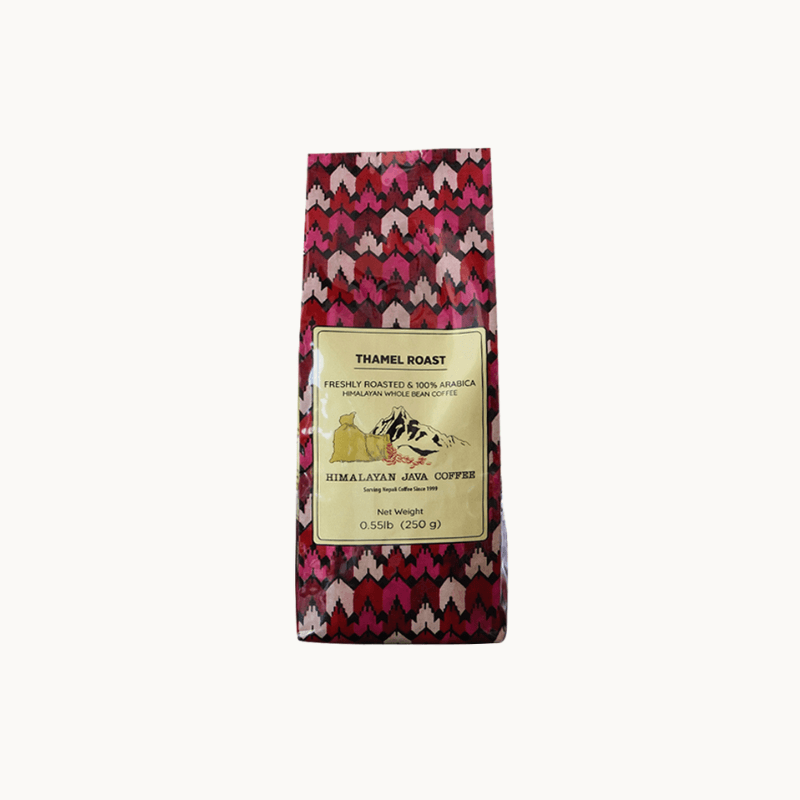
Everything here is roasted inside Kathmandu by working Nepali roasters — Himalayan Java, Nepal Coffee Company, and kar.ma Coffee are the three vendors you'll see most often. Direct-from-roaster pricing, same-day hotel delivery, no middleman markup on beans that were already grown at 1,400 metres.
Coffee grown above 1,200 metres ripens slowly, which concentrates sugars and produces a brighter, more aromatic cup. Nepal's mid-hill regions sit squarely in that altitude range — Gulmi, Syangja, Kavre — and the beans reflect it.
The Nepali roasters we stock — Himalayan Java, Nepal Coffee Company, kar.ma Coffee — work with named cooperatives and small-lot supply chains. Roast dates are recent, grinds are packaged to order.
You're paying what a local café or supermarket in Kathmandu would pay. No tourist-facing markup, no third-party distributor margins stacked on a 250 g bag.
Coffee is new to Nepal relative to tea — the first meaningful plantings went in during the 1970s, after a Nepali hermit returned from Myanmar with seeds and began distributing them across the mid-hills. Commercial scale came later, in the late 1990s, when cooperatives in Gulmi and Kavre started exporting small lots to specialty buyers in Japan and Europe. Today coffee is still a minor crop by hectare — well under 3,000 tonnes of green coffee annually — but the quality has moved quickly, and Nepali single-origins now routinely place well in regional cupping competitions.
Because the industry is still small, Nepali coffee is almost entirely shade-grown on family plots, hand-picked, and wet-processed in small micro-mills. That matters for cup quality — mechanised harvesting inevitably picks under-ripe and over-ripe cherries together, while hand-picking lets farmers take only the ripe ones. The result is a cleaner green coffee with fewer defects, which is what gives Nepali beans their reputation for brightness and clarity.
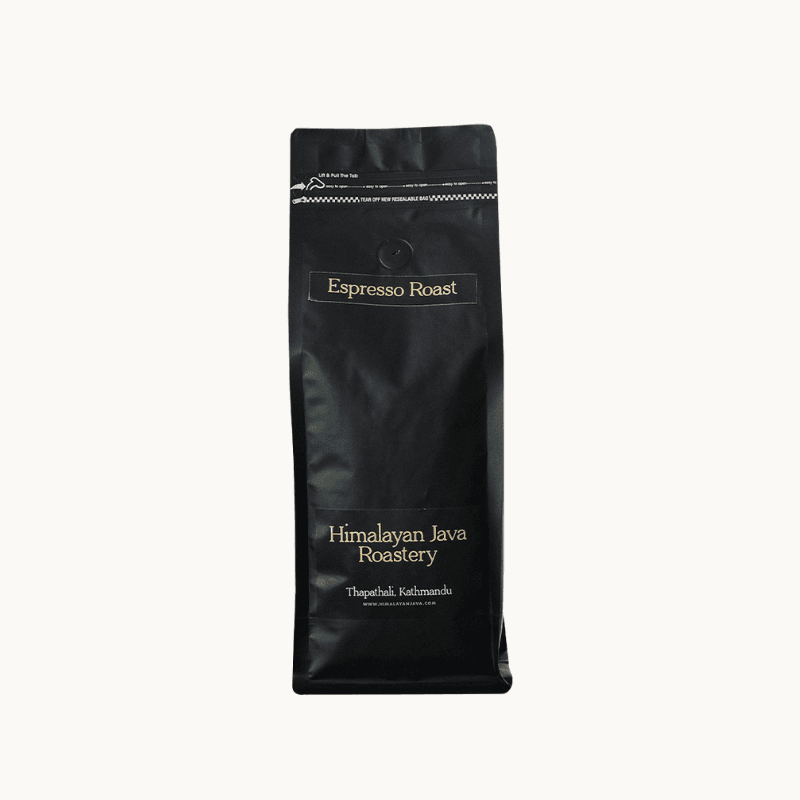
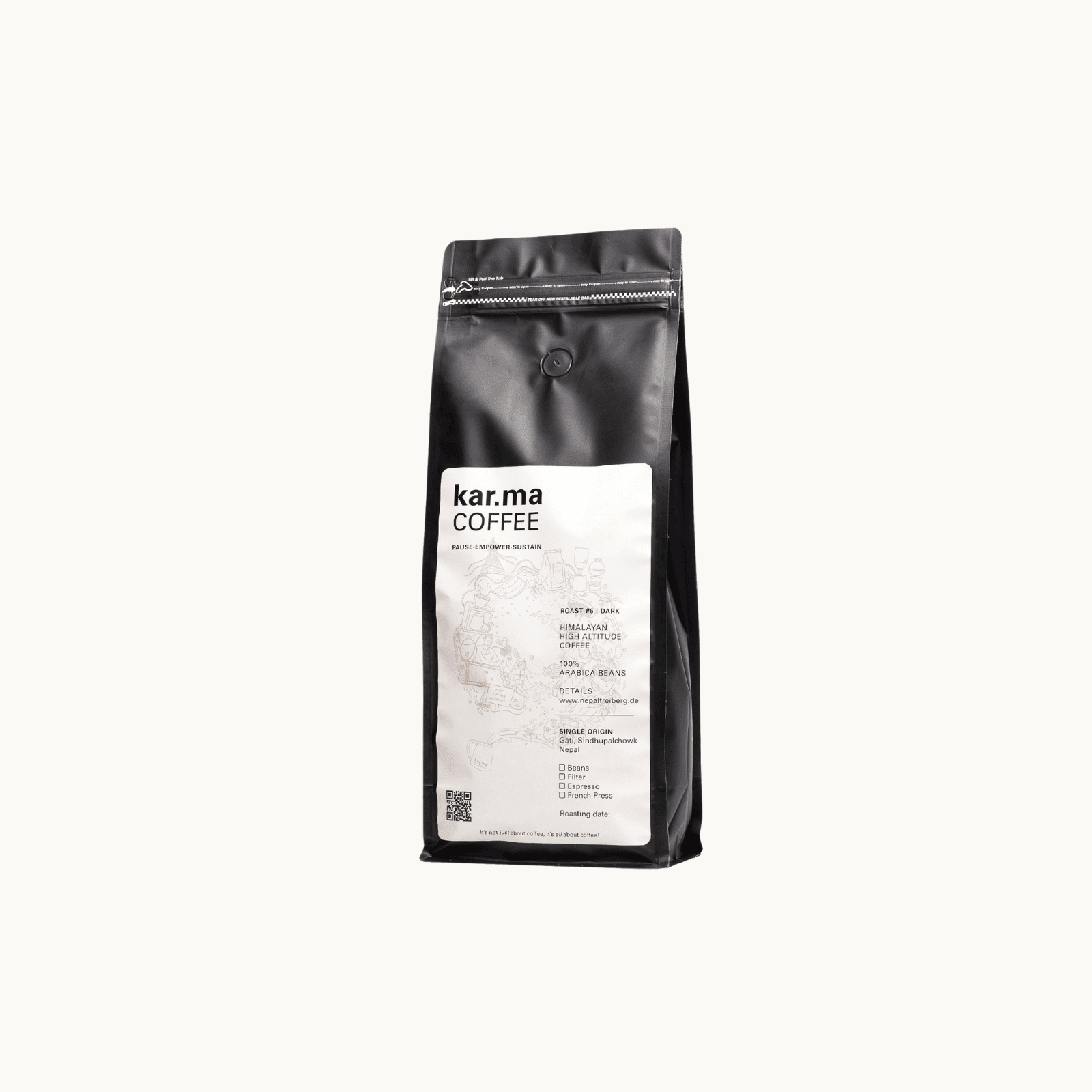
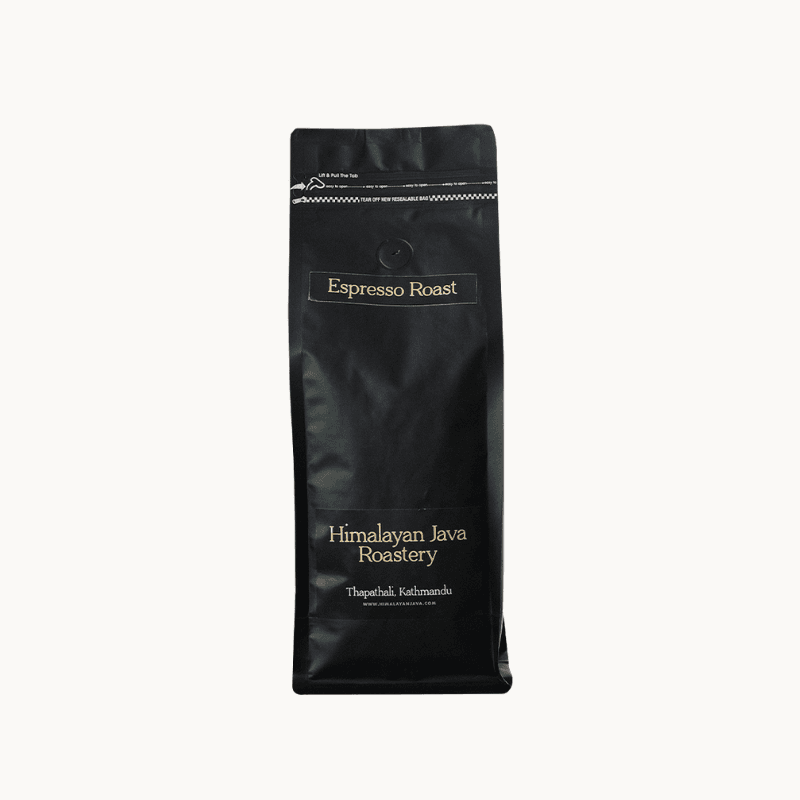
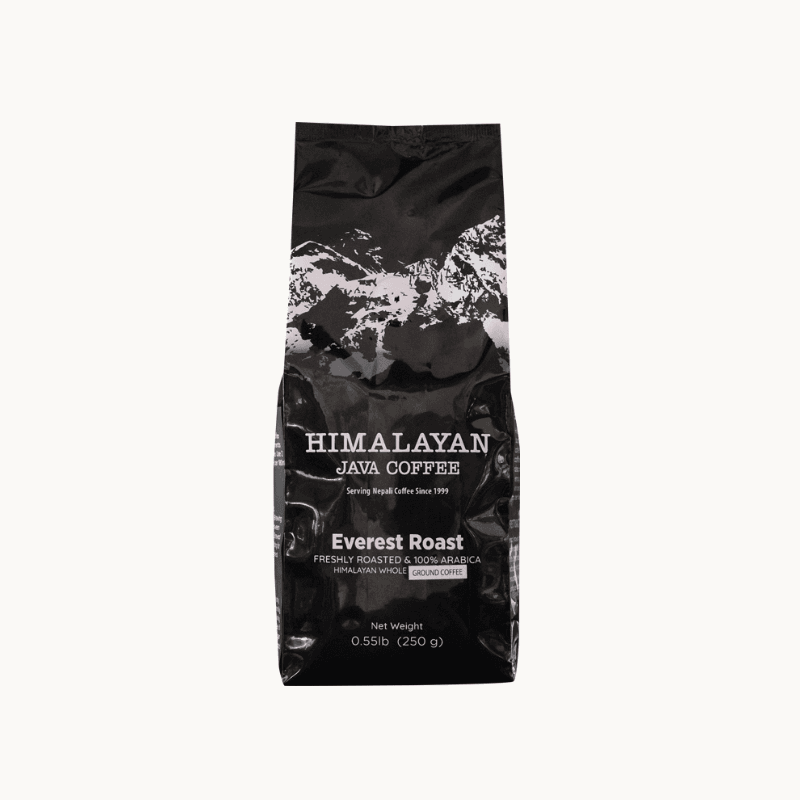
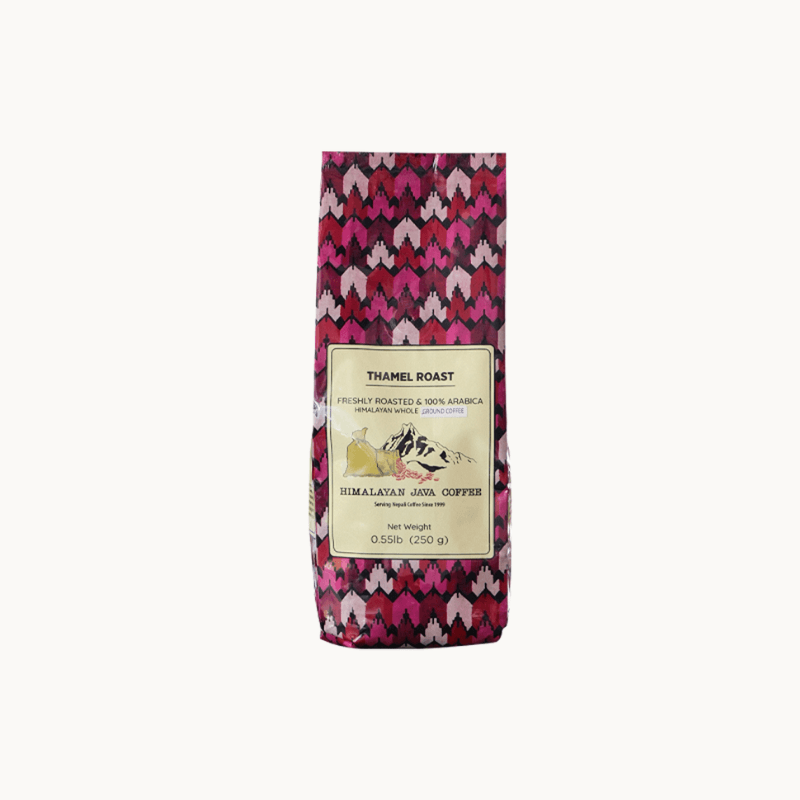
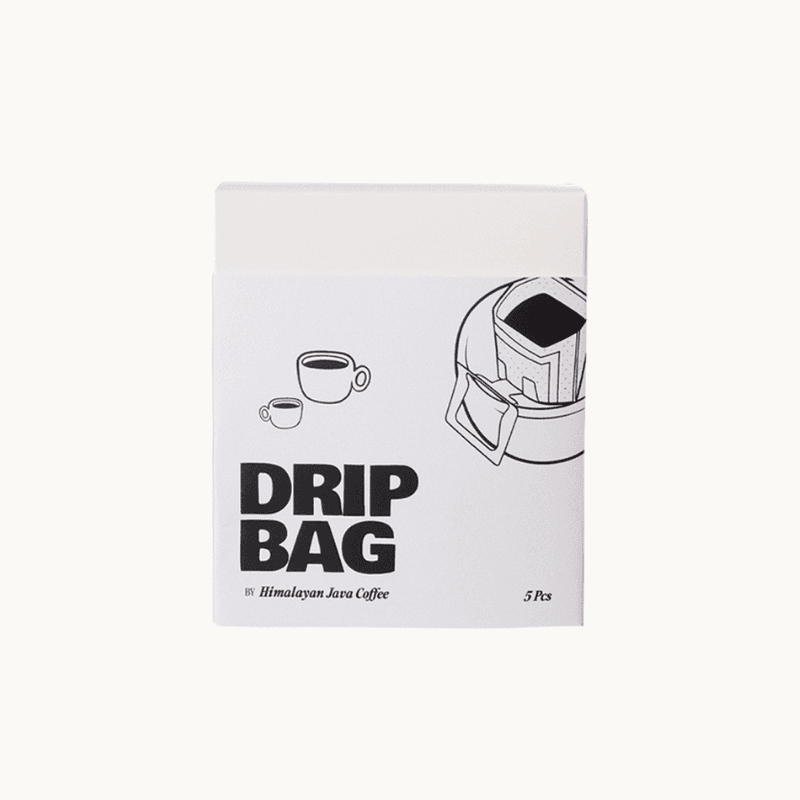
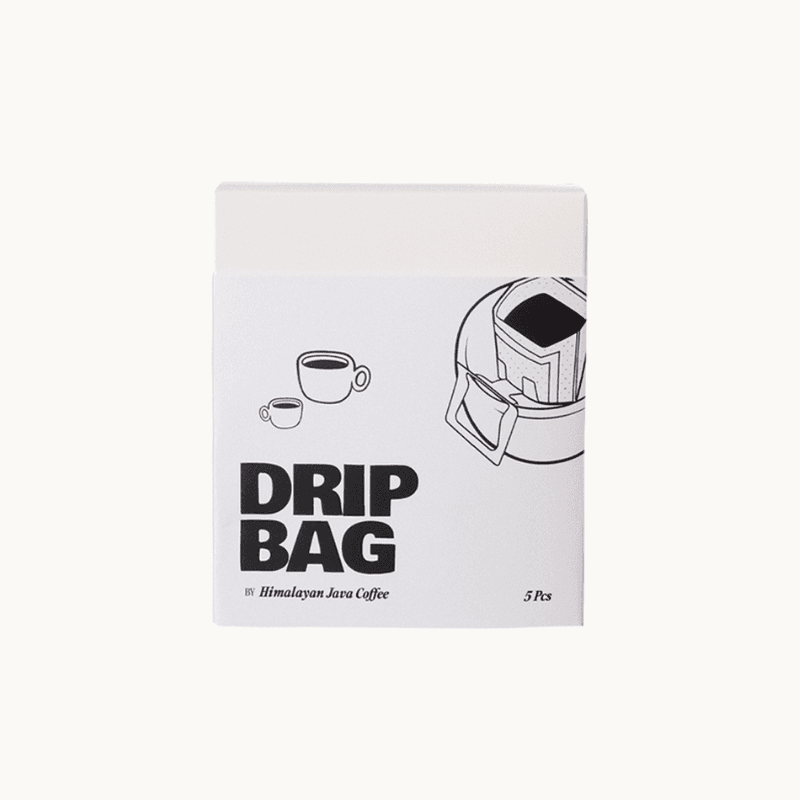
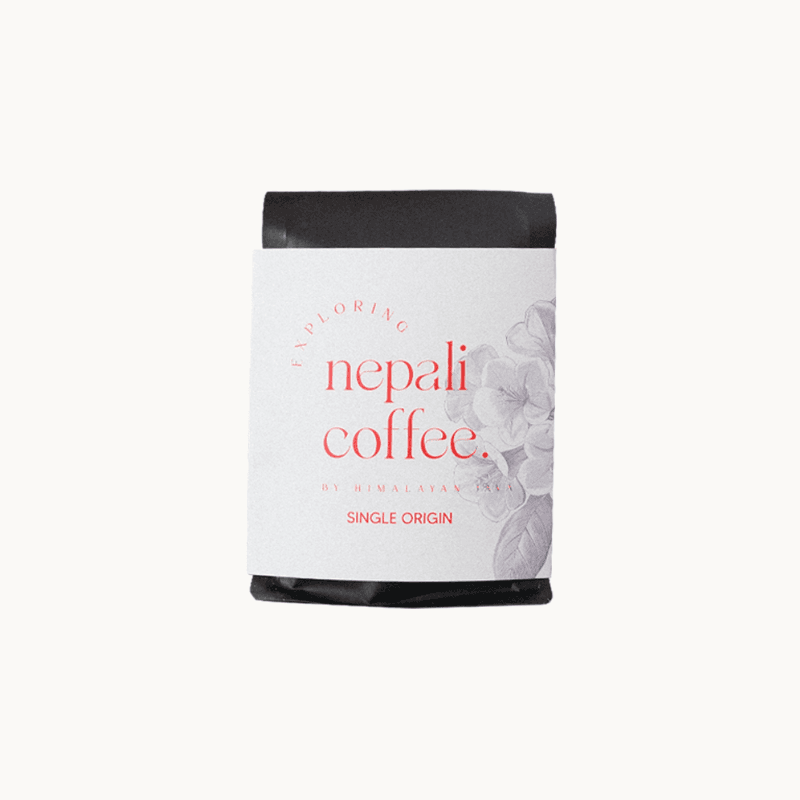
The catalogue below includes medium and dark roasts (Himalayan Java's Espresso Roast, Everest Roast, and Medium Roast), flavoured roasts (Nepal Coffee Company's Nutty Hazelnut, Frothy Caramel Latte, Chocolaty Mocha, Bailey's Irish Creme, Creamy French Vanilla), and clean single-origins from kar.ma Coffee in 250 g and 500 g bean bags. Drip-bag formats — both Himalayan Java's Standard Lot / Micro Lot drip bags and Farm Shop's Coffee of Promise drip bags — are the easiest way to try Nepali coffee in a hotel room that has hot water but no brewer.
If you're taking coffee home as a gift, whole beans keep longest — roasted whole beans stay drinkable for 3–4 weeks after roast, while ground coffee peaks at about 10 days. Every product page here shows the roast date, the origin region when it's a named single-origin, and whether the bag is beans, ground, or drip-sachet format.
Most Nepali coffee is Arabica, high-altitude, and wet-processed — which produces a bright, clean cup with notes of citrus, stone fruit, and, in some single-origins, a chocolate or caramel finish. It drinks closer to Ethiopian or Central American coffee than to earthy, low-altitude Asian styles.
The main producing districts are Gulmi, Syangja, Kaski, Kavre, Lalitpur, and Sindhupalchok, all in the mid-hills between 1,000 and 1,600 metres. Gulmi is considered the historical heart of Nepali coffee; Kavre and Sindhupalchok are closer to Kathmandu and supply a lot of the fresh-roast market in the valley.
Himalayan Java is Nepal's largest specialty café chain and runs its own roastery with a full roast range (Espresso, Everest, Medium). Nepal Coffee Company focuses on flavoured single-origin blends (Nutty Hazelnut, Caramel Latte, Bailey's). kar.ma Coffee is a smaller craft roaster with clean single-origin beans in 250 g and 500 g bags.
Yes — roasted coffee in sealed retail packaging is accepted in checked luggage and (usually) carry-on, subject to airline rules. Beans travel better than ground coffee; drip bags are the most compact format.
Drip bags are the easiest option if all you have is a kettle — tear the sachet, hang the filter over your cup, and pour hot water. For whole beans or grind, you'll need a French press or an AeroPress; Avendi doesn't sell brewers but most mid-range Kathmandu hotels will lend one on request.