The Peranakan — descendants of Chinese migrants who married into the local Malay communities of 15th–19th century ports across the Malacca Strait — developed a distinctive hybrid culture that is still one of the defining influences on modern Singapore. Peranakan tiles, nyonya kebaya dress, and a kitchen that fused Chinese technique with Malay ingredients (laksa, kueh, ayam buah keluak, ondeh ondeh) are all still instantly recognisable, and Peranakan heritage shows up across Singapore's design and food culture today.
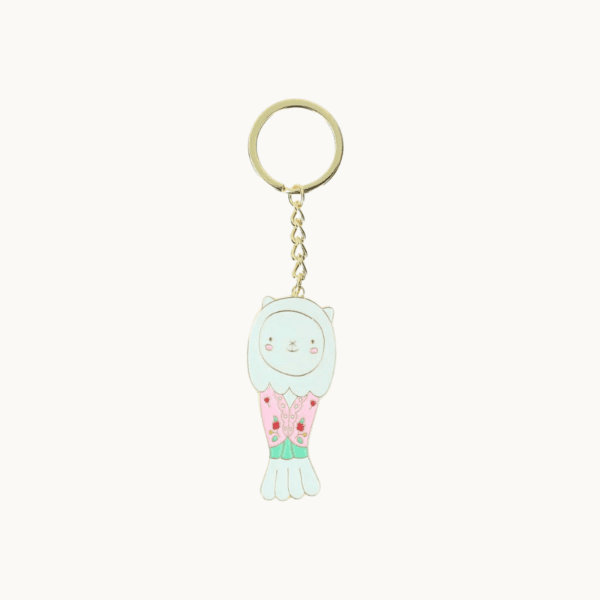
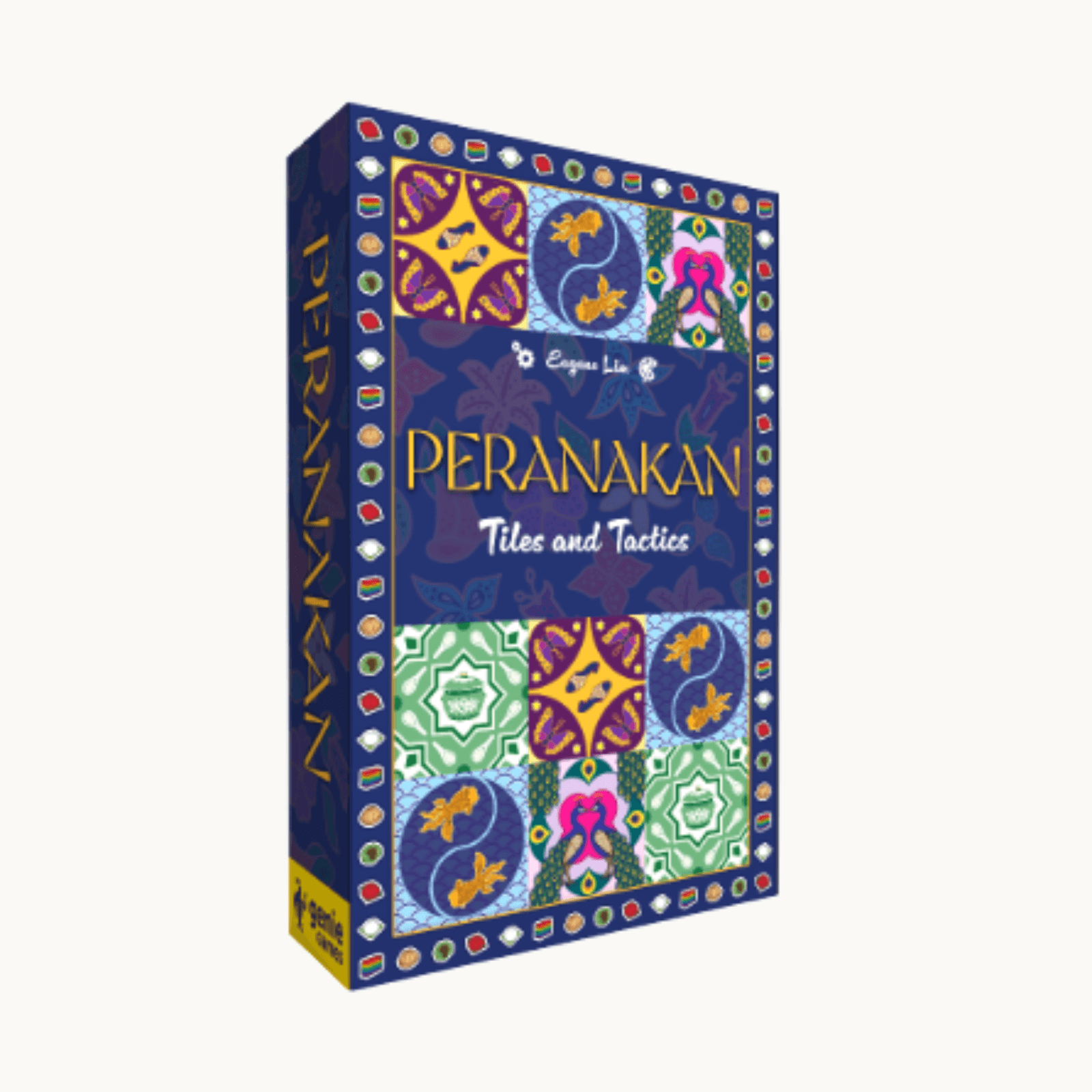
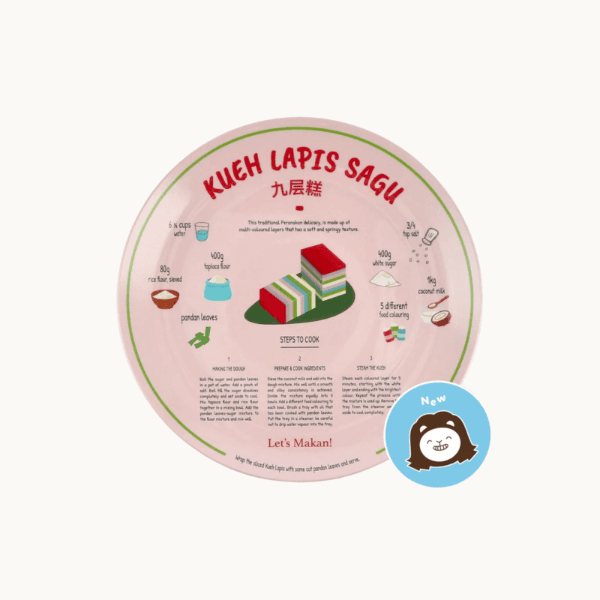
This page collects Avendi's Peranakan-themed gifts across vendors: NOM's Nyonya Kebaya Merlion keychain, Nyonya Laksa and Kueh Lapis Sagu and Ondeh Ondeh recipe plates; Mind Cafe's Peranakan: Tiles and Tactics board game; Strait Lights' Joo Chiat shophouse and Emerald Hill art cards. Each vendor is Singapore-based.
Peranakan culture is not a museum exhibit — it's the food at a Katong coffee shop, the tiles on a Joo Chiat shophouse, the kebaya worn at a wedding. Gifting something Peranakan-themed gifts a piece of modern Singapore's cultural DNA.
No single vendor carries the full Peranakan story. This landing pulls together dress (NOM's Nyonya Kebaya keychain), food (NOM recipe plates, Mind Cafe Peranakan game), and architecture (Strait Lights art cards from Joo Chiat, Emerald Hill) so a single order captures the breadth.
Every piece here is designed and produced by a Singapore studio — not souvenir-shop imports. Mind Cafe prints the Peranakan board game locally; NOM illustrates plates and keychains in-house; Strait Lights draws each neighbourhood art card from photographs they've taken around Katong and Joo Chiat.
Peranakan decorative language blends Chinese, Malay, and European influences into a recognisable vocabulary. Floral motifs — peony, chrysanthemum, lotus — stand for prosperity, beauty, and longevity, and appear most often on porcelain, scarves, and enamel brooches. Phoenix and peacock represent elegance and female grace, traditionally used on kebaya beadwork and beaded slippers (kasut manek). Geometric tile patterns, derived from the imported English and Belgian tiles that decorate Katong shophouse facades, show up on coasters, framed prints, and cushion covers. Straits porcelain patterns — blue-and-white blends, Famille rose adaptations — bridge Chinese ceramic tradition with local taste.
Recognising motif categories helps you choose. Florals suit family and home gifts (recipe plates, teaware, scarves). Phoenix and beadwork suit wearable keepsakes (brooches, keychains, mini-beaded slippers). Tile patterns suit housewarming and decor (coasters, framed prints, small cushions). Straits porcelain suits dinnerware sets and corporate-style gifting. Each motif on Avendi's catalogue comes with a maker's note explaining the reference — not just a stock pattern lifted from elsewhere.
The Peranakan-style market includes both genuine craft and mass reproductions, and the difference shows in three places. First, the maker: an authentic piece comes from a named Singapore studio or atelier with a clear address (NOM in central Singapore, Mind Cafe with their Peranakan board game, Strait Lights in Joo Chiat). Reproductions are usually unbranded or carry a generic souvenir-shop label. Second, the technique: hand-illustrated plates show brushstroke variation; hand-stitched beadwork has uneven tension with knots visible on the reverse; printed pieces have perfectly uniform colour. Third, the price: the maker's own price (what they charge on their site) is the resident rate. A souvenir shop charging 2–3× more for the same SKU is the markup tell.
Compact items make the best Peranakan souvenirs for travellers — Nyonya Kebaya keychains, recipe plates (melamine, not ceramic), enamel brooches, kueh-themed coasters. All of these pack flat in a suitcase, survive a flight without bubble wrap, and carry the motif language home in a form that gets used. Skip the fragile porcelain antiques and the large framed tiles unless you're checking a bag and prepared to bubble-wrap heavily.
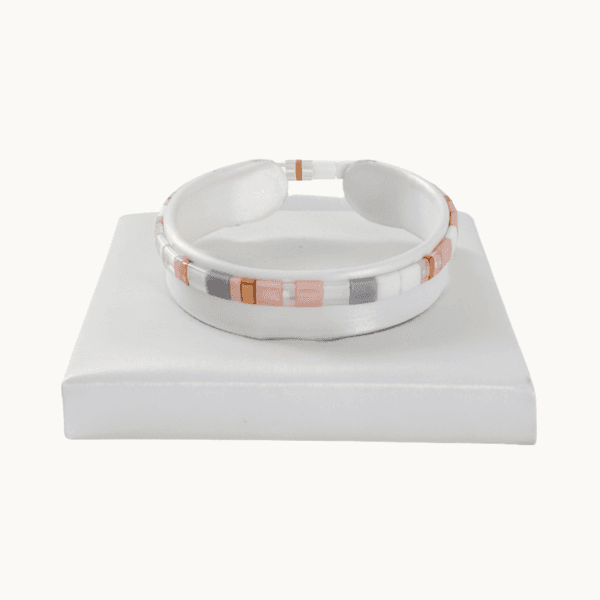
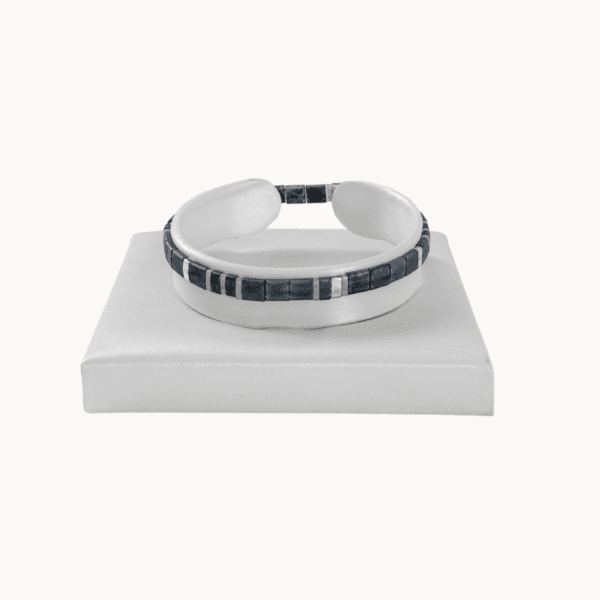
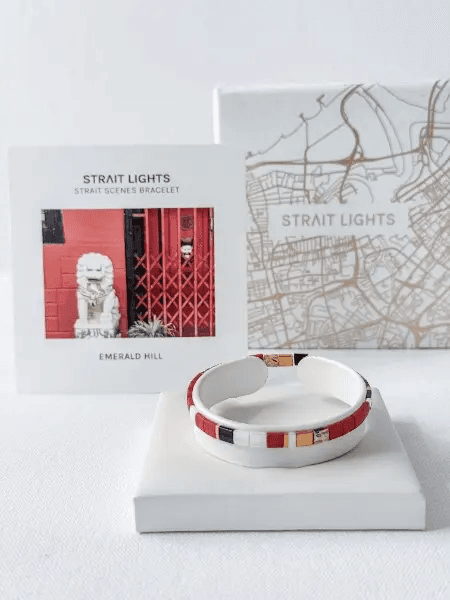
Peranakan culture is not a museum exhibit — it is a living layer of modern Singapore. The Katong and Joo Chiat neighbourhoods carry the most visible Peranakan footprint: pastel shophouses with hand-painted tiles, Nyonya restaurants serving laksa and ayam buah keluak, kebaya tailoring shops, and the small design studios that reinterpret the motifs for a contemporary audience. Walk Koon Seng Road or East Coast Road in Katong to see the original shophouse facades the Strait Lights bracelet collection draws from.
Emerald Hill on the edge of Orchard Road preserves another cluster of Peranakan shophouses, more conservation-listed and harder to photograph because they're now mostly private residences. The Peranakan Museum near Stamford Road holds the curated, museum-grade reference collection — useful as a half-day stop to see the original kebaya, porcelain, and beaded slippers up close before you decide what to take home.
Avendi's Peranakan edit pulls from makers working in those exact neighbourhoods. The recipe plates and Nyonya Kebaya keychain come from NOM. The Peranakan board game (Peranakan: Tiles and Tactics) is printed and assembled by Mind Cafe locally. Strait Lights draws each neighbourhood art card and bracelet from photographs they've taken around Katong, Joo Chiat, and Emerald Hill. Buying from Avendi is buying directly into that small local creative economy, not from a souvenir-shop reseller in a tourist district.
Peranakan (sometimes called Baba-Nyonya) culture emerged from the marriage of early Chinese migrants — mostly from Fujian province — to local Malay women across the Malacca Strait ports of Penang, Malacca, and Singapore from roughly the 15th century onwards. The resulting culture fused Chinese ceremony, Malay dress, and a distinct cuisine, and it's recognised today as a core thread of Singapore's heritage.
Peranakan tiles are the ceramic tiles — often brightly coloured, often floral or geometric — that decorate the facades of traditional shophouses in Katong, Joo Chiat, Emerald Hill, and the old Peranakan districts of Penang and Malacca. They were originally imported from England, Belgium, and Japan in the late 19th and early 20th centuries, but the tile patterns themselves have become a distinctive Peranakan visual marker.
Two signature Peranakan crafts. Kasut manek are beaded slippers — hand-stitched with hundreds of tiny faceted glass beads into floral or phoenix patterns on a velvet base; an authentic pair can take months and shows slight irregularities with visible thread work on the reverse, whereas mass versions use larger plastic beads that are glued, not stitched. Nyonyaware (also called Straits porcelain) is the brightly enamelled porcelain — peony, phoenix, and butterfly motifs in pinks, greens, and yellows — historically commissioned by Straits Chinese families from the kilns of Jingdezhen, China, for weddings and festivals. Avendi's edit favours travel-friendly takes on these traditions (recipe plates, enamel brooches, beadwork-inspired keychains) rather than fragile antiques, each with a maker's note explaining the reference.
The nyonya kebaya is the traditional blouse worn by Peranakan women — a sheer embroidered top, usually in silk or voile, paired with a sarong or batik skirt. The embroidery style (kerawang) is a Peranakan specialty. NOM's Nyonya Kebaya Merlion keychain dresses the Merlion in a miniature kebaya as a nod to that dress tradition.
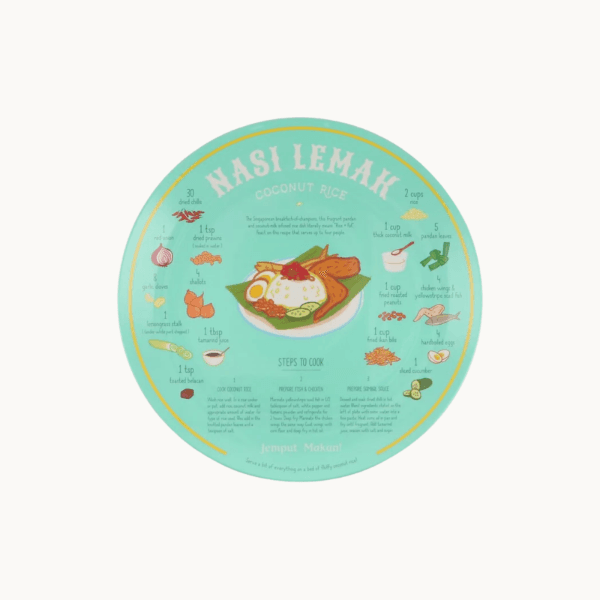
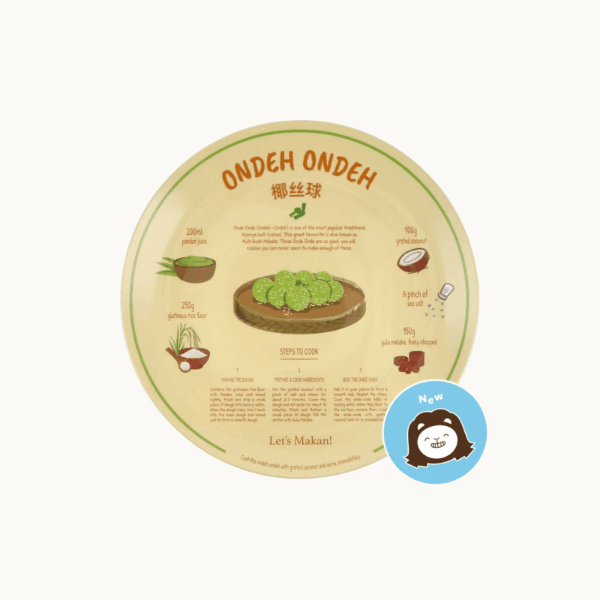
NOM's recipe plates include Nyonya Laksa (coconut-based curry noodle), Kueh Lapis Sagu (the stacked rainbow sago cake), and Ondeh Ondeh (pandan-coconut rice-ball with palm sugar filling) — three of the most recognisable dishes in the Peranakan repertoire. Each plate carries the full recipe printed directly on it.
Yes — Peranakan design motifs have become part of shared Singapore identity, and giving Peranakan-themed gifts reads as gifting a piece of Singapore rather than appropriating a community's culture. If you're attending a specific Peranakan ceremony (wedding, birthday), go with food-themed (recipe plates, Mind Cafe Peranakan game) rather than dress-themed gifts.