Dhaka Topi and Dhaka Fabric: Nepal’s Handwoven National Cloth
Shop this story on Avendi
See all →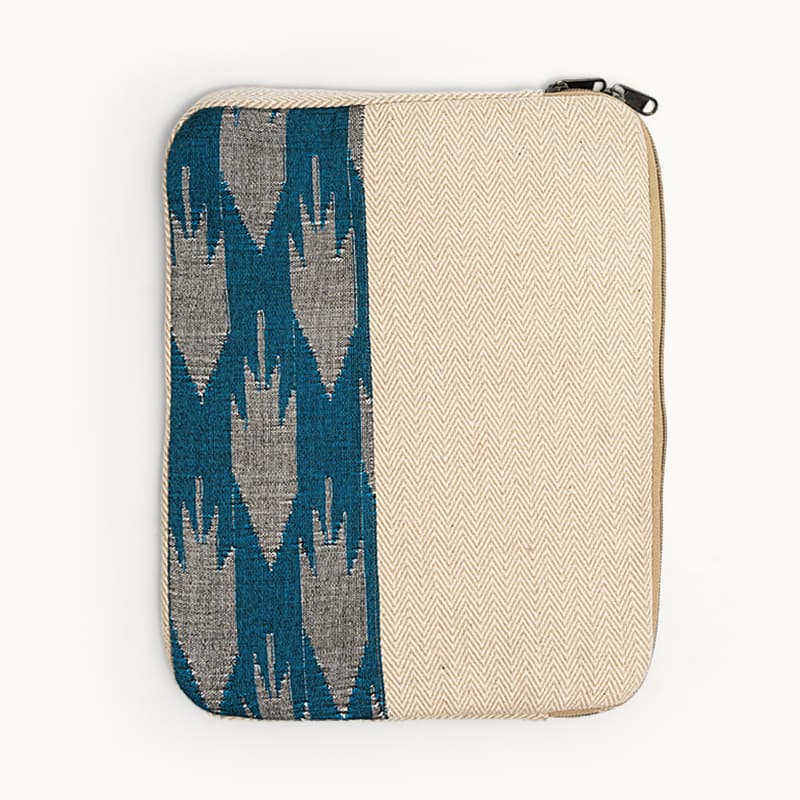
Look at any official portrait of a Nepali public figure and one detail keeps repeating: a small, brimless cap covered in bright geometric pattern. That cap is the dhaka topi, and the cloth it is cut from is one of Nepal’s proudest handmade textiles. Together they carry a whole national identity in a few square inches of woven cotton.
This guide explains both halves of the story — the cloth and the cap. You will learn what Dhaka fabric actually is, where it is woven, how the dhaka topi became Nepal’s national headwear, and how to tell a genuine handwoven piece from a cheap printed copy. So whether you want to buy a tie, a purse, or the cap itself, you will know exactly what you are looking at.
What is the dhaka topi?
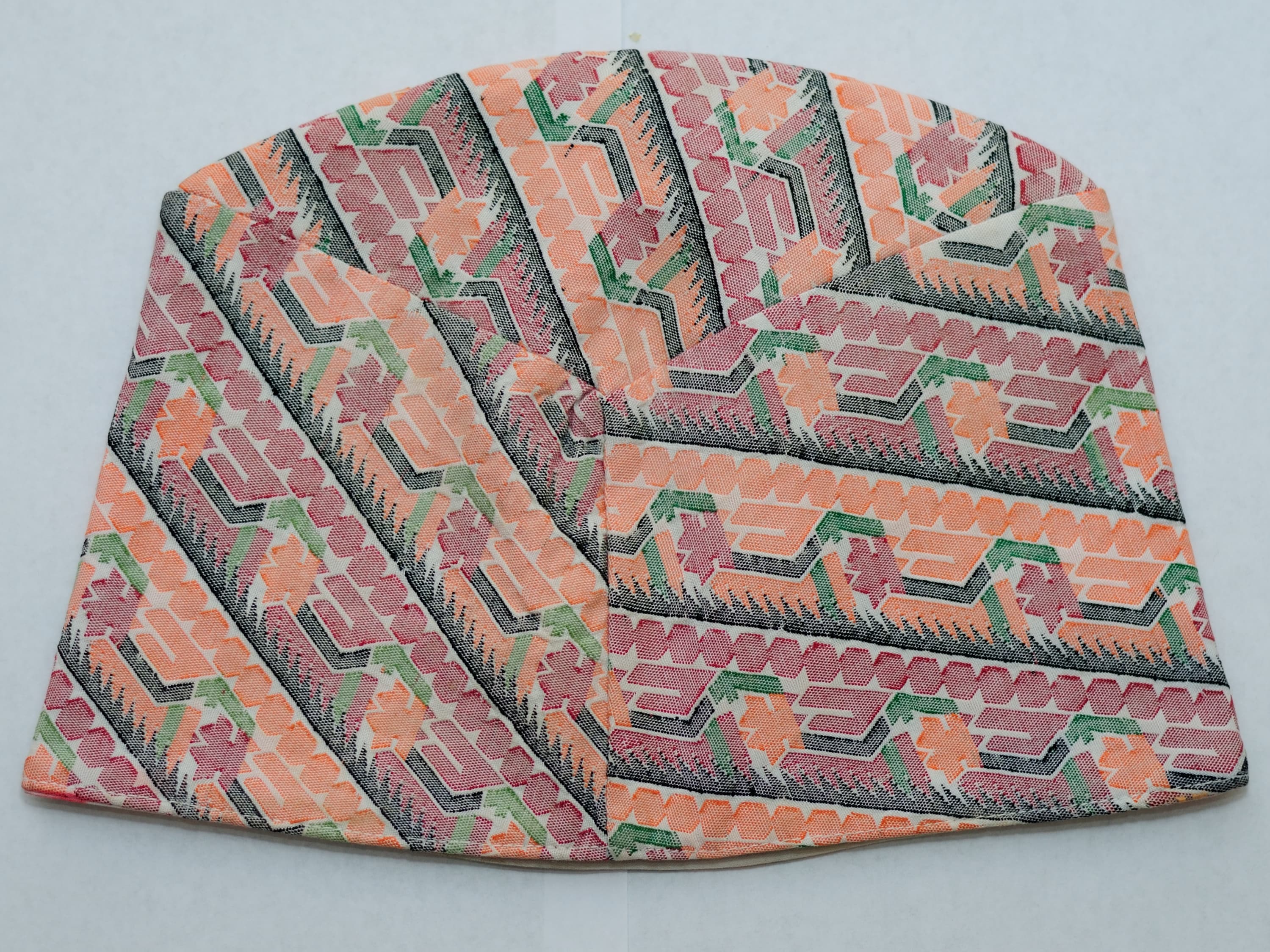
The dhaka topi is the traditional Nepali cap stitched from Dhaka fabric, a handwoven cotton cloth famous for its vivid, multicoloured patterns. Nepali men wear it as formal and ceremonial dress, usually paired with the daura-suruwal, the national costume. You will see it at weddings, festivals, government offices, and in the photographs on Nepali passports and citizenship cards.
The word “topi” simply means “cap” in Nepali, and Dhaka names the cloth. So a dhaka topi is, literally, a cap made of Dhaka cloth. It is not the only Nepali cap — the plain black bhadgaunle topi is also national dress — but the colourful Dhaka version is the one most people picture when they think of Nepal.

What is Dhaka fabric?
Dhaka fabric is a fine handwoven cloth, traditionally made from cotton, and instantly recognised by its dense geometric patterns of diamonds, crosses, and zig-zags in contrasting colours. Weavers build those motifs into the cloth itself with a supplementary-weft, or “inlay”, technique: extra coloured threads are worked in by hand as the fabric is woven, so the pattern is part of the structure rather than printed on top.
That hand process gives real Dhaka two telltale qualities. First, loose floating threads run across the back, carrying each colour from one motif to the next. Second, no two lengths are ever quite identical, since the weaver sets out each pattern by hand. The result is a textile that feels three-dimensional and slightly irregular, in the best possible way.
The colours have shifted over time. Early Dhaka used plain cotton yarn in a limited palette. Later, many workshops moved to mercerised cotton and even acrylic thread for a brighter sheen and stronger colour. As a rule, though, the finest pieces still start with cotton, and the cloth turns up today as caps, shawls, blouses, the women’s mekhli, ties, bags, and gift items.
Is Dhaka fabric from Bangladesh? The name explained
This is the most common confusion, so let us settle it. The fabric itself is Nepali, but its name does point outward. By the most common account, the fine cotton thread used for the weave once reached Nepal through Dhaka, in Bengal, the same city famous for delicate Dhaka muslin. Some accounts say a returning official brought the idea home from Dhaka; others note the Newar term dhaka for the special thread. Still, some historians note that no firm written record of this link survives. So treat it as the leading theory, not settled fact. Either way, the cloth is woven in Nepal — only the name travelled.
From Tehrathum to Palpa: where Dhaka is woven
Dhaka has two heartlands, one in the east and one in the west. The older roots lie in eastern Nepal, among the Kirati peoples. The Limbu and Rai communities, especially around Tehrathum, wove Dhaka long before it became a national fashion, and it still forms part of Limbu dress: the men in cap and scarf, the women in mekhli, shawl, and shari.
The western story is the one most shoppers know. In the town of Tansen, in Palpa district, weaving has a long pedigree, and the local cloth earned its own brand name: Palpali Dhaka. The fabric first became fashionable in the nineteenth century, after Dambar Kumari, a daughter of Prime Minister Jung Bahadur Rana, wore Dhaka cloth she had brought back from Banaras. The craft then took commercial root in Palpa around the 1950s, when the weaver Ganesh Man Maharjan set up a workshop to produce it at scale.
The looms themselves were once cut from a local pine the Magar weavers call Tangsing. For decades Palpa held a near-monopoly, but production has since spread to other districts. So when you read “Palpali Dhaka” on a label, it points to that western tradition, while plenty of fine Dhaka still comes from the eastern hills where it began.

How the dhaka topi became a national symbol
The cap was not always a national emblem. Its rise dates mainly to the reign of King Mahendra, who ruled from 1955 to 1972. As part of a broader push to promote homegrown identity over Western dress, he made the dhaka topi part of the official national costume. He also required it in passport photographs and for government officials on formal duty, which quickly fixed it as a marker of Nepali citizenship.
That official status cuts two ways, and it is worth being honest about it. For most Nepalis the cap is a warm symbol of belonging. Yet some writers note that making one cap “national” also pressed a single look onto a country of many cultures. Today the rules have relaxed, so people wear the dhaka topi by choice — at festivals such as Dashain and Tihar, at weddings, and on national days — rather than by decree.

Dhaka Topi Day
One date now celebrates the cap directly. Every 1 January, Nepalis at home and abroad mark Dhaka Topi Day, also called National Topi Day or dhaka topi diwas, by wearing the cap and sharing photos of it. Interestingly, the day was never declared by the government. Instead, it grew from the diaspora: Nepali student groups and youth associations, especially in the United States, began promoting it around 2011 to 2013 as a simple act of pride. The idea then travelled home, and it has stuck.

How Dhaka cloth is woven
Traditional Dhaka begins with raw cotton and a lot of patience. Weavers first spin the cotton into yarn on the charkha, the spinning wheel. They then dye the thread, dry it in the sun, and finally weave it on the haate taan, the hand loom. Because the patterning is added thread by thread, a single intricate length can take days to finish.
The skill, importantly, has always passed from one generation to the next by hand and by eye, rather than from a manual. Much of that work is done by women, who carry the patterns in memory and improvise as they go. As a result, the geometry stays consistent across the tradition while every weaver keeps a personal touch. That blend of rule and freedom is exactly what makes the cloth feel alive.
Authentic handwoven Dhaka vs machine-made copies
As demand grew, cheap power-loom and printed imitations followed, often shipped in from outside Nepal. Telling them apart protects both your money and the weavers. Happily, genuine handwoven Dhaka gives itself away once you know the signs.
- Turn it over. Real hand-inlaid Dhaka leaves loose floating threads on the back, running from one pattern to the next. A machine cannot copy that. A flat, blank, or fuzzy reverse usually means it is printed.
- Feel for the weave. The pattern on true Dhaka stands up slightly, with a faint ridged texture you can feel. A flat, smooth surface points to a print.
- Look for small irregularities. Handwork carries tiny, charming variations. Machine output repeats with perfect, lifeless precision.
- Check the yarn and price. Heavy, matte cotton suggests traditional cloth, while a very shiny, very cheap piece is often acrylic or imported. Genuine Palpali Dhaka runs around NPR 1,500 a metre. Imported imitation sells for roughly NPR 300, so a bargain-priced “Dhaka” is a warning sign.
- Ask about the source. A genuine piece can usually be traced to Palpa, the eastern hills, or a named cooperative. If nobody can tell you where it was woven, stay cautious.
The simplest safeguard is to buy from sellers who name their weavers or region. You will pay a fair price, and far more of it reaches the person at the loom.
How to care for Dhaka fabric
Dhaka is sturdy, but it is still hand-dyed cloth, so treat it gently and it will last for years. Where you can, spot-clean small marks rather than washing the whole piece. When a full wash is needed, hand-wash in cold water with a mild detergent, and never use harsh bleach, which strips the colour.
Drying and storage matter just as much. Dry the cloth flat and in the shade, because strong direct sun fades the dyes over time. Avoid wringing or tumble-drying, since both can distort the weave. Finally, iron on the reverse at a medium heat, and store ties, caps, and purses folded and dry. With that small routine, genuine Dhaka holds its colour and crisp pattern.
Dhaka beyond the topi
The cap may be the icon, but the cloth has travelled far beyond it. Designers now turn Dhaka into neckties and bow ties, shawls and scarves, purses, laptop bags, aprons, and trim on modern kurtas and dresses. Much like Mithila art, it is a heritage craft finding new life on everyday objects.
This is also why Dhaka makes such a meaningful gift. A Dhaka tie or purse carries a clear piece of Nepali identity, which is why these pieces are popular as corporate and diplomatic presents, and as keepsakes for the diaspora. You give craft and culture together, not just an accessory.
Dhaka fabric on Avendi
Avendi lists handwoven Dhaka accessories sourced from Nepali makers, so the money supports the weaving tradition rather than a printed lookalike. The range covers office wear, everyday bags, and gifts. Because each piece is cut from handwoven cloth, the exact pattern varies a little from item to item.

Ties for the office and formal wear
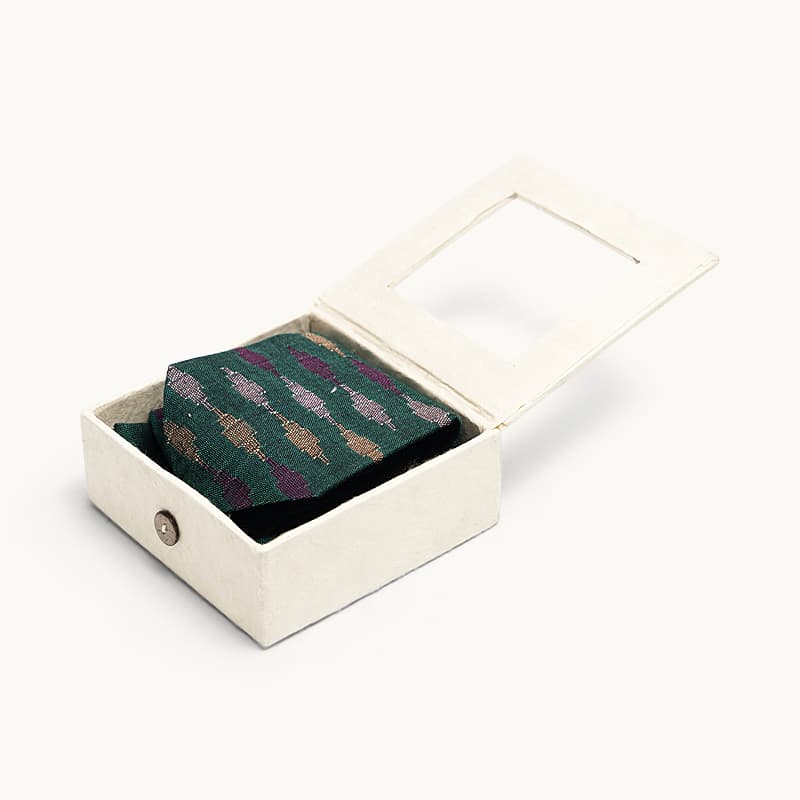
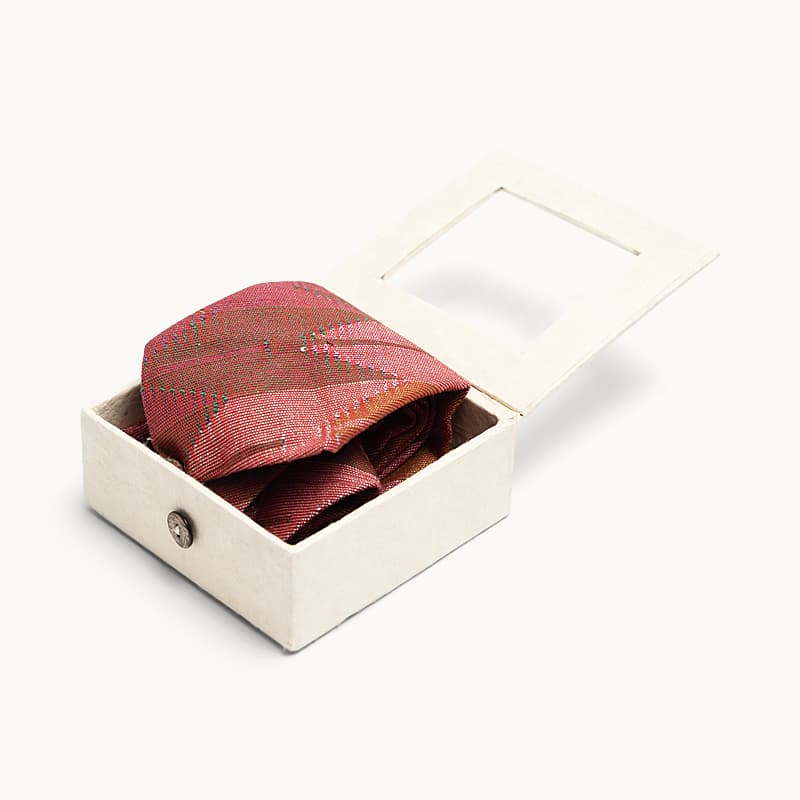
A Dhaka tie is the easiest way to wear the tradition to work. Avendi stocks the necktie in three colourways — grey and gold, green, and red (NPR 2,200 each). Each one pairs the vivid Dhaka weave with a sharp, modern cut, so it suits business meetings and weddings alike.
Bags and purses
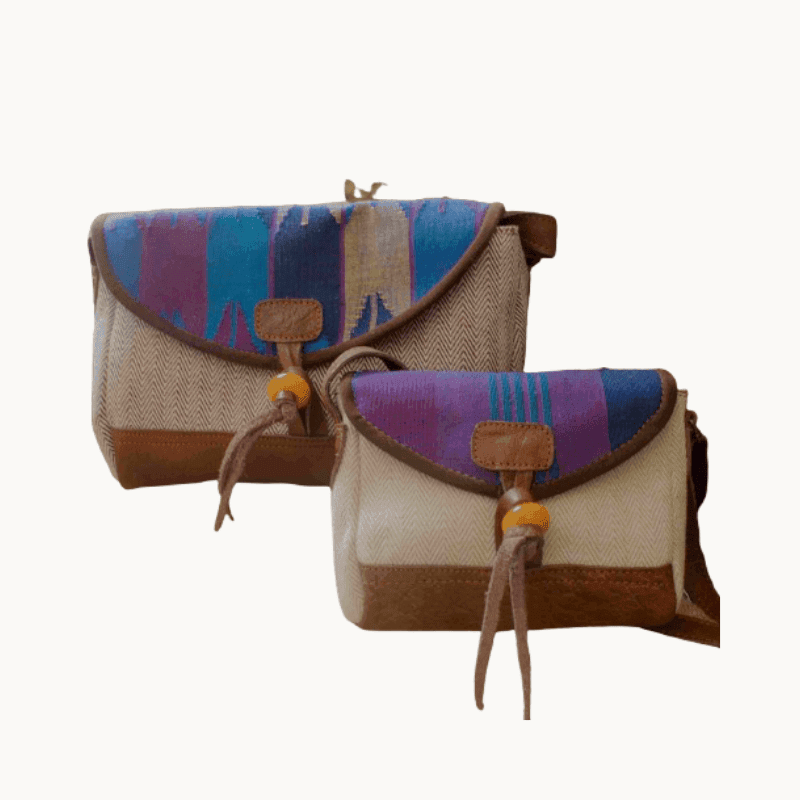
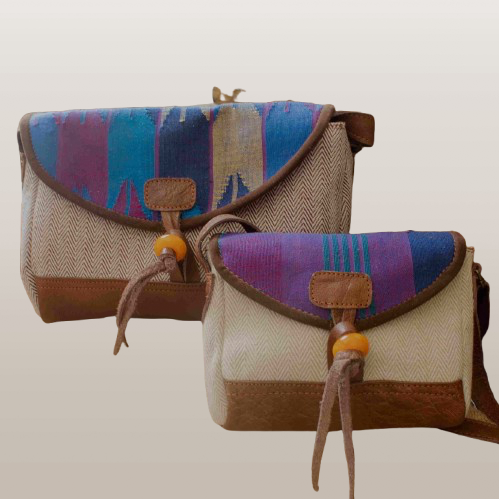
For everyday carry, the bags combine Dhaka cloth with leather. The small Dhaka purse (NPR 850) is a neat starter, while the larger purses step up in size and price: a compact purse (NPR 2,200) and a big-size purse with leather trim (NPR 3,200). For work, the blue and red laptop bags (NPR 2,200) and the large laptop bag (NPR 2,500) carry the pattern to your desk.
Aprons and everyday pieces
If you want something practical, the Khusi Apron (NPR 1,950) is made from traditional Palpali Dhaka, with full coverage, a waist tie, and two roomy front pockets. It brings the heritage cloth into the kitchen and the studio.
Authentic handwoven Dhaka, sourced from Nepali weavers.
Frequently asked questions
What is a dhaka topi?
A dhaka topi is the traditional Nepali cap stitched from handwoven Dhaka fabric. Men wear it as formal and national dress, usually with the daura-suruwal, at weddings, festivals, and official occasions. It is also the cap seen in Nepali passport and citizenship photographs.
Is Dhaka fabric from Bangladesh?
No. The cloth is woven in Nepal. Its name simply points to Dhaka in Bengal, because the fine cotton thread once reached Nepal through that city, which was also famous for Dhaka muslin. So the name travelled, but the weaving tradition is Nepali.
What is Dhaka fabric made of?
Traditionally it is woven from cotton, spun and dyed by hand. The signature geometric pattern is created with an inlay, or supplementary-weft, technique, so it sits inside the cloth rather than on top. Some modern pieces add mercerised cotton or acrylic thread for extra sheen and colour.
Where is Dhaka fabric woven in Nepal?
Dhaka has two main homes. The eastern hills, especially Tehrathum, are its older heartland, where Limbu and Rai weavers have made it for generations. The western town of Tansen, in Palpa, is the famous commercial hub, which is why much branded cloth is called Palpali Dhaka.
What is Palpali Dhaka?
Palpali Dhaka is Dhaka cloth woven in Palpa district, around the town of Tansen. The area built a strong reputation for the craft from the mid-twentieth century, so the name now works almost like a brand for quality western-Nepal Dhaka.
Why do Nepalis wear the dhaka topi?
The cap became part of the national costume under King Mahendra in the 1950s and 1960s, and it has stood for Nepali identity ever since. Today people wear it mainly by choice, at festivals, weddings, and national celebrations, as a sign of pride and belonging.
When is Dhaka Topi Day?
Dhaka Topi Day, also called National Topi Day or dhaka topi diwas, falls on 1 January. It was not declared by the government; instead it grew from diaspora Nepali communities around 2011 to 2013 and spread back home as a grassroots celebration of the cap.
How can I tell authentic handwoven Dhaka from a copy?
Turn the cloth over. Genuine hand-inlaid Dhaka has loose floating threads on the back, and the pattern feels slightly raised. Printed copies have a flat, blank reverse. Handwoven pieces also carry small irregularities, use matte cotton rather than glossy acrylic, and can be traced to a region or cooperative.
How do I wash a Dhaka tie or purse?
Spot-clean where you can. For a full clean, hand-wash in cold water with mild detergent, skip the bleach, and dry flat in the shade. Never wring or tumble-dry the cloth, and iron on the reverse at medium heat. Stored folded and dry, it keeps its colour for years.
How much does a dhaka topi or Dhaka accessory cost?
Prices depend on the cloth and the work. As a guide, Dhaka accessories on Avendi range from a small purse at NPR 850 to ties at NPR 2,200 and a large laptop bag at NPR 2,500. Handwoven pieces cost more than printed lookalikes, because real weaving takes far more time.
Is Dhaka a good gift?
It is one of the most meaningful Nepali gifts you can give. A Dhaka tie, purse, or cap carries a clear piece of national heritage, so it works beautifully for weddings, corporate presents, and keepsakes for friends and family living abroad.
The bottom line
The dhaka topi and the cloth behind it are more than national dress; they are a living craft kept alive by weavers in Palpa and the eastern hills. When you choose genuine handwoven Dhaka, you support those makers and bring home a real piece of Nepal rather than a printed copy. So check the reverse of the cloth, ask where it was woven, and buy from a source that names its weavers. If you enjoy discovering Nepal’s specialties, browse our guide to the best things to buy in Kathmandu next.
Image credits: Nepali Dhaka topi by Ramnam (CC BY-SA 3.0); Dhaka topi with national dress by Ak479726 (CC BY-SA 4.0); Dhaka Topi Day by Gaurav Dhwaj Khadka (CC BY-SA 4.0); Dhaka topis at Patan Durbar Square by sushan116 (CC BY-SA 4.0) — all via Wikimedia Commons. Product images courtesy of the vendors / Avendi.