Himalayan Shilajit from Nepal: Benefits, Forms, Safety & Where to Buy
Shop this story on Avendi
See all →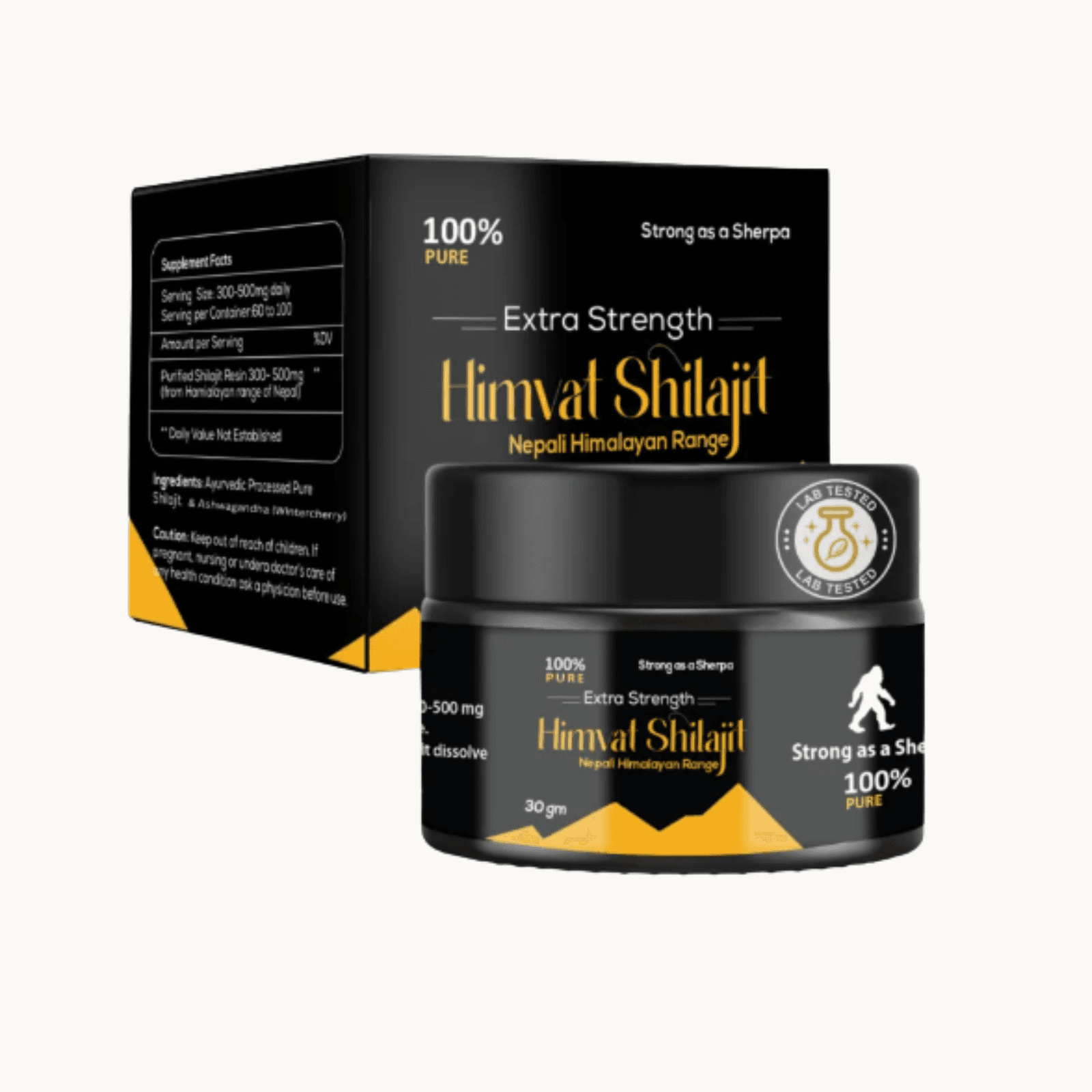
High in the Nepal Himalayas, where the air thins and few plants survive, a dark, tar-like resin seeps from the rock each summer. Mountain communities and Ayurvedic healers have prized it for centuries. They call it shilajit — Sanskrit for “conqueror of mountains,” and often translated as “destroyer of weakness.” Today it has become one of the most talked-about supplements in the world, driven by social media and a surge of interest in natural men’s and women’s wellness. It is also one of the most faked products you can buy.
This guide separates what the evidence actually shows from the marketing hype. It explains how genuine Himalayan shilajit forms, how good producers purify it, and how to use it safely — and how to tell real Nepali resin from an expensive lump of tar.
What Is Shilajit?
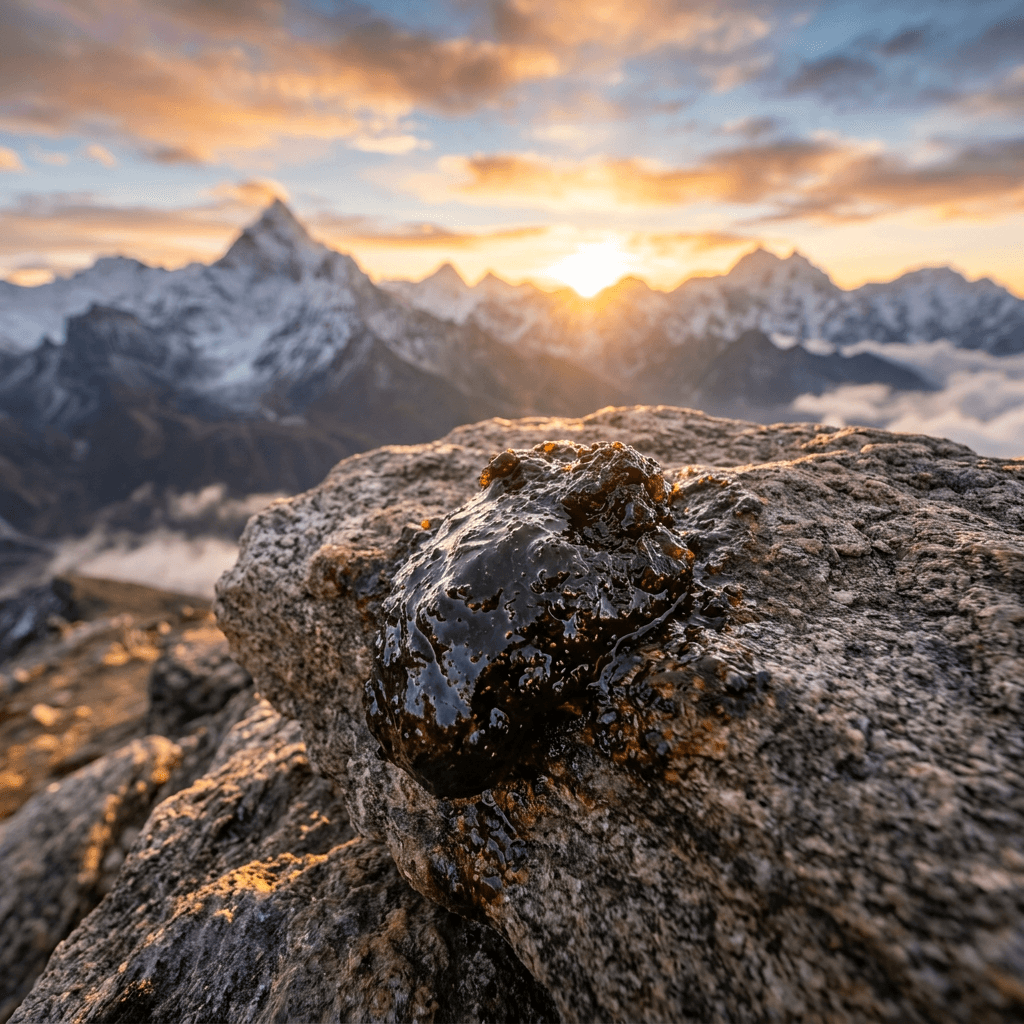
Shilajit (also known as mumijo or moomiyo) is a sticky, blackish-brown organic-mineral resin. It oozes from cracks in rock in high mountain ranges — above all the Himalaya, but also the Altai, Caucasus and Karakoram. Collectors gather it between roughly 1,000 and 5,000 metres, and the freshest material seeps out in summer, when the high-altitude sun warms the rock faces.
The name comes from the Sanskrit shila (rock) and jit (conqueror). Ayurveda classes it as a rasayana — a rejuvenating tonic — and it appears in classical texts such as the Charaka Samhita and Sushruta Samhita. Traditional healers used it for energy, vitality and recovery for well over a thousand years, long before modern science began to investigate why.

What’s Actually Inside: Fulvic Acid, Minerals and DBPs
Humic substances make up most of shilajit — roughly 60–80% — and the headline active compound is fulvic acid. Fulvic acid is a small, low-molecular-weight molecule, so it absorbs well in the gut. It works as an antioxidant and as a “carrier” that helps move minerals into cells. Two other groups matter too: dibenzo-alpha-pyrones (DBPs), a distinctive class of antioxidants that researchers link to mitochondrial function, and more than 80 trace minerals in ionic form, including iron, zinc, magnesium, copper and selenium.
That dense mineral profile is shilajit’s great strength — and the reason purity testing matters so much. The same geology that concentrates good minerals can also concentrate heavy metals. So the source and the lab report behind a jar matter as much as the resin itself.
How Shilajit Forms in the High Himalaya
No one mines or manufactures shilajit. It forms through an extraordinarily slow natural process. Over hundreds, even thousands, of years, layers of rock trap and slowly compress plant and organic matter at altitude. Scientists believe latex- and resin-bearing plants (and, by some accounts, high-altitude mosses) decompose under pressure to create a humus-rich exudate. When the summer sun warms the mountainsides, this resin softens and seeps out through cracks in the rock. Harvesters then scrape it off carefully by hand.
Nepal ranks among the finest sources of pure Himalayan shilajit. The most prized material comes from remote, high-altitude districts such as Humla, Dolpa, Mustang, Manang, Jumla and Mugu. These regions are hard to reach, sparsely populated and largely untouched — exactly the conditions that produce clean, mineral-rich resin. The shilajit Avendi lists comes from the Humla region at around 5,000 metres, and the vendor purifies it in small batches. Like Nepal’s famous Himalayan mad honey, genuine shilajit is a product of this remote environment — not something you can farm or factory-make.

Shilajit Benefits: What the Evidence Actually Says
Shilajit is biochemically fascinating, and traditional medicine holds it in extremely high regard. But it pays to be honest: the modern human evidence is still thin. It rests mostly on a handful of small trials, several of them industry-funded. Here is an honest, evidence-graded look, so you can decide for yourself rather than rely on social-media claims.
Shilajit benefits for men
The most cited human study is a randomised, double-blind, placebo-controlled trial (Pandit et al., 2016). Healthy men aged 45–55 took purified shilajit for 90 days. The shilajit group saw a significant rise in total and free testosterone and DHEAS, while the pituitary hormones LH and FSH held steady — a reassuring signal. A separate small study in men with low sperm counts reported better sperm count, motility and morphology. The honest caveats: these are small, single trials, and one had no placebo arm. They encourage, but they don’t prove.
Benefits for women
Shilajit isn’t just “for men.” A 48-week randomised controlled trial in postmenopausal women with osteopenia found that a standardised extract slowed bone-mineral-density loss in a dose-dependent way, alongside better bone-turnover markers. It’s one of the stronger studies, though still small and industry-sponsored. Women also take shilajit for energy, skin and general vitality, where the evidence leans more traditional than clinical. One important caution: shilajit is iron-rich, so women who are pregnant or breastfeeding should avoid it, as should anyone with an iron-overload condition (see the safety section below).
Energy, focus and recovery
The most popular reason people reach for shilajit is energy. The mechanism is plausible: fulvic acid and DBPs appear to support the mitochondria, the cell’s energy factories, and animal studies back this up. You’ll often see dramatic figures online (“144% more ATP” and similar). Treat these as preliminary and promotional, not proven human outcomes. The same goes for memory and Alzheimer’s claims: fulvic acid does interesting things to tau protein in a test tube, but no human trials exist, and this is the single most over-hyped claim about shilajit. Himalayan communities have also long used it to cope with high-altitude fatigue — a lovely piece of heritage, but again not proven in controlled trials.
The fair summary, echoed from independent reviewer Examine to the Cleveland Clinic: shilajit looks promising and is well-tolerated in studies so far, but most trials are small, so cautious optimism is the right stance. It is a wellness supplement, not a medicine — and it should never replace medical treatment.
Resin, Powder, Capsules or Gummies: Which Form Is Best?
Shilajit comes in several forms, and they are not equal:
- Resin — the traditional gold standard. It stays closest to the raw, purified substance, with minimal processing and (in good resin) a high fulvic-acid content. The trade-offs: a strong, bitter, earthy taste, and you measure and dissolve it yourself.
- Powder — convenient to mix, but turning resin into powder usually involves heat that can degrade some of the actives.
- Capsules — precise dosing, no taste, no mess and travel-friendly; often a standardised extract.
- Gummies — the most palatable, but manufacturing heat and added sugar usually mean the lowest potency.
One nuance cuts against the simple “resin always wins” story. Independent testing by ConsumerLab in 2024 found that the fulvic-acid content of shilajit products varied enormously between brands. Some resins even contained less fulvic acid than certain capsule extracts. The lesson isn’t “avoid resin” — a genuine, high-grade Himalayan resin is excellent. It’s that verified fulvic-acid content and purity matter more than the format on the label. Reassuringly, that same testing found heavy metals in reputable, purified products stayed within safe limits at one serving a day.
How to Use Shilajit: Dosage, Timing and Taste
For resin, research and most labels point to about 300–500 mg per day — roughly a pea-sized amount. The classic method is simple. Dissolve that portion in a glass of warm (not boiling) water or warm milk, and drink it, ideally in the morning. A good resin includes a small spoon for measuring; Avendi’s jars come with a brass spoon for exactly this.
- When: Most people take it once a day in the morning. Take it with or just after food if your stomach is sensitive.
- Taste: Authentic resin is intensely bitter and earthy — “soil after rain.” Warm milk or a little honey makes it more pleasant.
- How long: Be patient. Clinical trials ran for around 90 days, so give it several weeks of consistent use rather than expecting an overnight effect.
- Storage: Keep resin sealed in a cool, dry place. It turns firmer when cold and softer when warm — all normal.

Is Shilajit Safe? Side Effects and Who Should Avoid It
This is the most important section, so let’s be direct. Never eat raw, unpurified shilajit. Straight from the rock, it can carry fungi, free radicals and heavy metals such as lead, arsenic, mercury and cadmium. Proper purification — whether traditional Ayurvedic sun-drying and filtration or modern lab processing — is what makes it safe to consume. And because regulators don’t police supplements tightly, the word “purified” on a label proves little on its own.
That is exactly why third-party lab testing matters most. A trustworthy seller can show a recent certificate of analysis. It should confirm that heavy metals fall within safe limits and state the fulvic-acid content, ideally tied to a batch number.
For most healthy adults, purified shilajit is well tolerated. Mild side effects can include an upset stomach, headache, dizziness or allergic reactions. Avoid shilajit, or speak to a doctor first, if you:
- Are pregnant or breastfeeding
- Have an iron-overload condition (haemochromatosis, thalassaemia) or sickle-cell disease
- Take medication for blood pressure, diabetes, or blood thinning
- Have an autoimmune condition, or use testosterone therapy
- Are about to have surgery, or are giving it to a child
A quick note: This article is for general information only and is not medical advice. Shilajit is a dietary supplement, not a treatment for any condition. Talk to a qualified healthcare professional before you start it, especially if you are pregnant, nursing, taking medication or managing a health condition.
How to Spot Real Shilajit from Fake
Because real shilajit is rare and valuable, the market is full of fakes — everything from cheap herbal pastes to tar, asphalt and clay. The most reliable proof of quality is paperwork: a stated origin and a third-party certificate of analysis. As a secondary, at-home check, genuine resin tends to behave in predictable ways:
- Dissolves cleanly: A small amount fully dissolves in warm water and turns it a dark golden-brown, with no grainy sediment or floating film.
- Doesn’t catch fire: Real resin won’t ignite — it may bubble and slowly turn to ash. A chemical or plastic smell when heated is a red flag.
- Changes with temperature: It turns hard and brittle in the fridge and soft and pliable in your warm hand.
- Tastes bitter and earthy: Authentic resin tastes sharply bitter and mineral. Sweet, perfumed or burnt-rubber notes — or no smell at all — suggest a fake.
Home tests only hint at quality; a determined counterfeiter can pass a few of them. So lead with the source. Buy from a seller that states where the shilajit comes from and backs it with lab testing.
Buying Shilajit on Avendi
Avendi lists authentic Nepali shilajit — hand-collected from the high Himalaya and purified in small batches — fulfilled directly by verified vendors. What reaches you is pure resin, not a filler-heavy knock-off. Both options below come from Sherpa Botanicals. Each is sourced from the Humla region at around 5,000 metres, holds 77% fulvic acid and over 80 trace minerals, is traditionally sun-dried and lab-tested, and arrives in a black glass jar with a brass dosing spoon.

Himvat Shilajit Extra Strength – with Ashwagandha (30g) — NPR 1,650. Pure Himalayan resin enriched with ashwagandha, the classic Ayurvedic adaptogen, for an added focus on stamina and resilience. A good choice if you want both in one daily ritual.

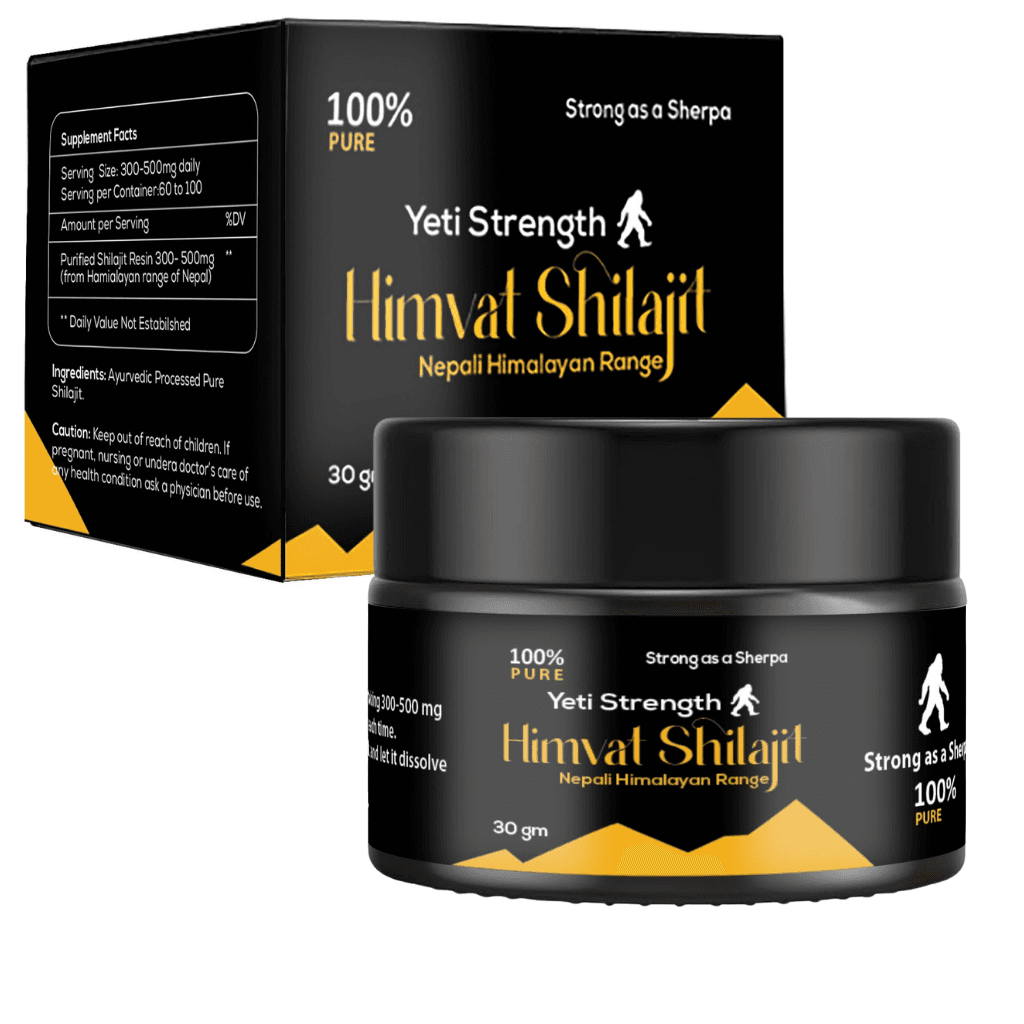
Himvat Shilajit Yeti Strength (30g) — NPR 1,650. Pure, single-ingredient Himalayan resin, certified by the Government of Nepal and produced to ISO/IEC standards. Ideal if you want shilajit on its own, with nothing added.
Pure Himalayan shilajit, sourced and lab-tested in Nepal.
Frequently Asked Questions
What is shilajit used for?
People take shilajit as a wellness tonic, most often for energy, stamina, recovery and overall vitality. In Ayurveda it’s a rasayana (rejuvenative), and modern interest centres on fulvic acid, dibenzo-alpha-pyrones and its trace-mineral content. The strongest human research so far covers testosterone in middle-aged men and bone density in postmenopausal women, but most other claims remain preliminary.
What are the benefits of shilajit for men?
The best-known study found that purified shilajit raised total and free testosterone in healthy men aged 45–55 over 90 days, and a separate small study reported better sperm quality. Many men also use it for energy and gym recovery. The evidence is encouraging but comes from small trials, so treat it as a supportive supplement rather than a guaranteed result.
Can women take it?
Yes — shilajit is not only for men. A controlled trial supports its use for bone-mineral density in postmenopausal women, and many women take it for energy and vitality. The key exceptions: avoid it during pregnancy and breastfeeding, and if you have an iron-overload condition, since the resin is iron-rich.
How do you take it, and how much per day?
The usual resin dose is about 300–500 mg a day — roughly pea-sized — dissolved in warm water or warm milk, typically in the morning. Use the measuring spoon that comes with a good jar, and start at the lower end.
How long does it take to work?
Give it time. The clinical trials ran for around 90 days, so consistent daily use over several weeks beats expecting an instant effect. Some people notice changes in energy sooner; hormonal and bone markers shift over months.
Are there any side effects?
Purified shilajit suits most people, but it can cause mild stomach upset, headache or allergic reactions in some. The bigger risk is poor-quality, unpurified product contaminated with heavy metals — which is why lab-tested resin from a stated source matters. Pregnant or breastfeeding women, people with iron-overload conditions, and anyone on medication for blood pressure or diabetes should avoid it or check with a doctor first.
Resin vs powder vs gummies: which is best?
Resin is the traditional gold standard and, when genuine and high-grade, the most potent. Capsules and gummies trade some potency for convenience and taste. But the most important factor is verified fulvic-acid content and purity, not the format alone — a tested, high-quality resin is the safest bet.
How does it compare with ashwagandha?
They do different jobs, and people often combine them. Shilajit is a mineral-rich tonic linked to energy and vitality; ashwagandha is an adaptogenic herb linked to stress and recovery. If you’d like both in one daily dose, a shilajit resin enriched with ashwagandha — like the Extra Strength option above — is a convenient way to do it.
Is it a steroid?
No. Shilajit is a naturally occurring, mineral-rich resin from mountain rock — not a synthetic anabolic steroid or hormone. Some early research suggests it may support the body’s own testosterone, but it contains no steroids.
Is it halal and vegan?
Pure resin is plant- and mineral-derived, so most people consider it vegan, and many producers carry halal certification. Because extraction methods vary, check that a specific product states it is certified halal if that matters to you.
Does it expire, and how should I store it?
It doesn’t spoil like fresh food, but its potency fades with poor storage. Kept airtight in a cool, dry place away from sunlight, a good resin stays potent for years. Always use a clean, dry spoon and reseal the jar after each use.
The Bottom Line
Shilajit is a genuinely remarkable product of the Himalaya, valued for centuries and increasingly studied today. The early human research — on testosterone and bone density in particular — looks promising, even if much of the online enthusiasm runs ahead of the evidence. When you buy, the boldest health claim matters less than one simple question: is this real, pure, Himalayan resin, from a stated source, with lab testing to prove it? Get that right, take it consistently and sensibly, and shilajit can earn a place in your wellness routine. If you enjoy discovering Nepal’s specialties, browse our guide to authentic Himalayan finds next.
Image credits: Annapurna massif, Nepal — Vyacheslav Argenberg (CC BY 4.0). Purified shilajit resin — Realseti (CC BY-SA 4.0). Dissolved shilajit — SnarkleBadger (CC BY-SA 4.0), all via Wikimedia Commons. Product images courtesy of Sherpa Botanicals / Avendi.