Singapore Food Souvenirs: 12 Edible Gifts Worth Bringing Home
Shop this story on Avendi
See all →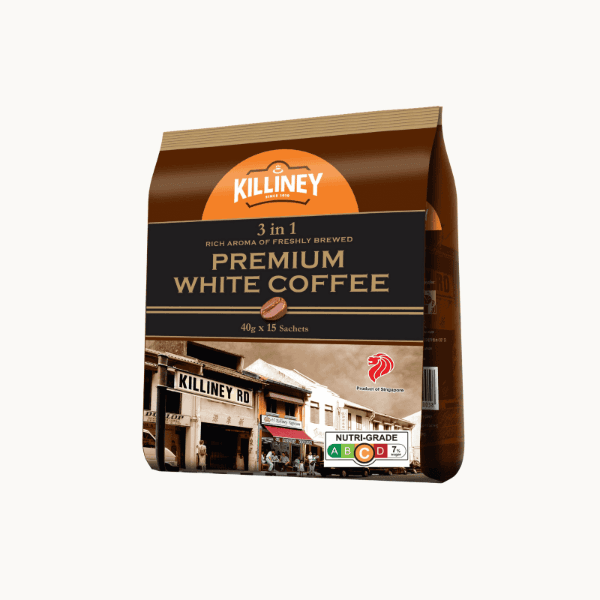
Singapore packs four cultures onto one plate, and its pantry tells the same story. So the best Singapore food souvenirs are not fridge magnets — they are the flavours locals actually eat: coconut kaya at breakfast, kopi at the kopitiam, laksa for lunch, and pineapple tarts every Lunar New Year.
However, some edible souvenirs travel beautifully, while others get seized at the airport. Therefore this guide does two jobs. First, it ranks the 12 tastiest gifts to bring home. Second, it tells you exactly which ones clear customs — and where to buy the real thing without paying tourist-shop prices.
🛍️ In Singapore right now?
The kaya, kopi, hawker pastes and dessert teas below come from their local makers — delivered to your hotel the same day, at the maker’s own price, with no tourist-shop markup.
Why bring home Singaporean food souvenirs?
Because food is the most honest souvenir there is. Singapore’s kitchen blends Chinese, Malay, Indian and Peranakan cooking, so a single jar or sachet carries centuries of cross-cultural history. In other words, you are not buying a trinket — you are buying a story you can taste.
Food gifts are also practical. They are light, they are easy to share, and many keep for months. Above all, they let you relive a hawker-centre holiday long after you have unpacked. With that in mind, here are the 12 best edible gifts to bring home.
1. Kaya — Singapore in a jar
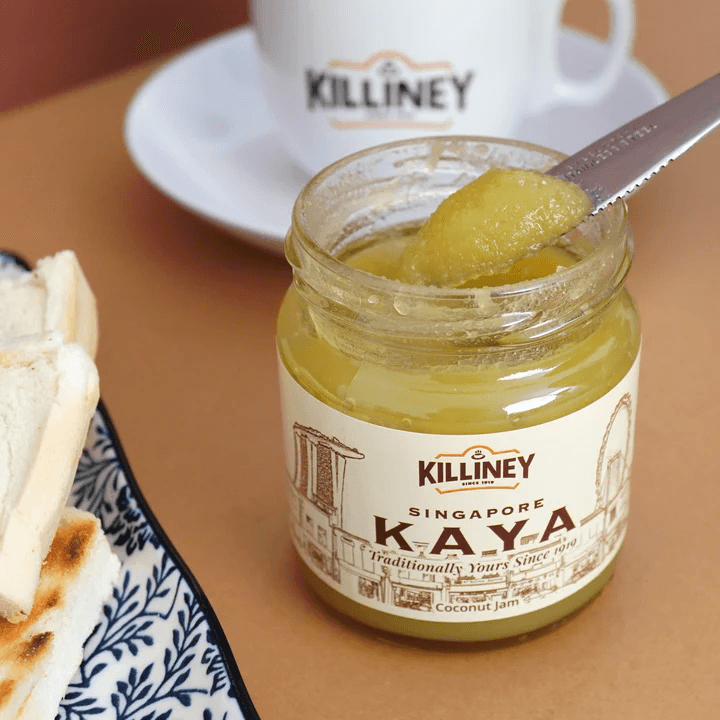
Kaya is the soul of the Singaporean breakfast. It is a soft coconut jam cooked from coconut milk, eggs and sugar, then perfumed with pandan leaves. Despite the name, it contains no fruit at all.
There are two classic styles, and the colour gives them away. Nyonya (Peranakan) kaya is green and floral, because pandan juice does the heavy lifting. Hainanese kaya, by contrast, is brown and caramel-rich, because the sugar is caramelised first. You spread both thick on toast, with a cold slab of butter.
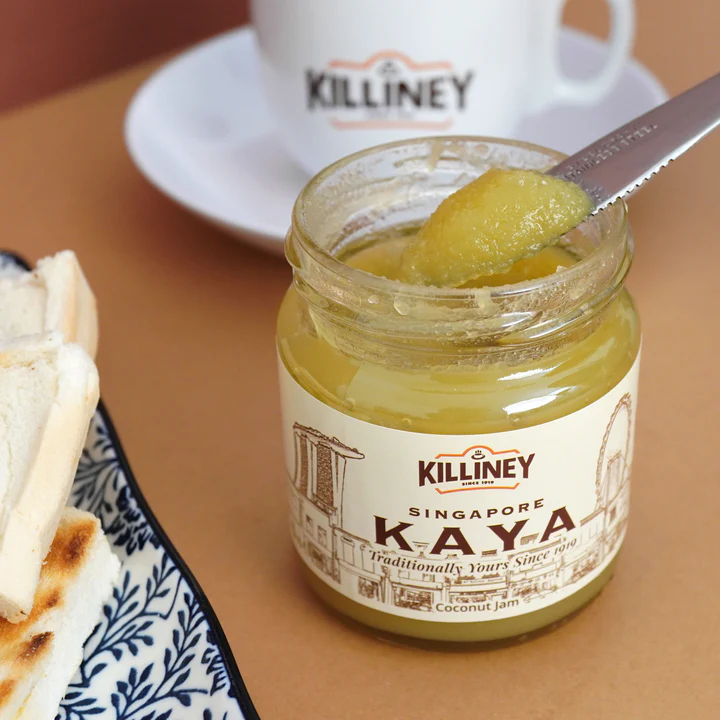
Killiney’s version now comes as a Kaya Coconut Jam sachet box (90g, S$5.50), carrying the recipe from a Hainanese coffeeshop that opened on Killiney Road back in 1919. The single-serve sachets are the smart traveller’s choice, because they survive cabin pressure and skip the messy jar.
2. Bak kwa — delicious, but check the border first
Bak kwa (肉干) is sweet, smoky, caramelised barbecued pork, grilled into glossy squares. It is a Hokkien delicacy that travelled from Fujian, and today it is the defining gift of Chinese New Year. Heritage shops like Lim Chee Guan and Bee Cheng Hiang see queues stretch for hours, and sales spike over 300% in the festive weeks.

Here is the catch, though. Bak kwa is pork, so you usually cannot bring it home. The United States, the European Union and Australia all ban pork products in personal luggage, and vacuum-sealing or a commercial label does not change that. As a result, customs routinely seizes the packs, and undeclared meat can trigger fines. You cannot even carry it from Malaysia into Singapore, where penalties reach S$10,000.
So enjoy bak kwa while you are in Singapore. Then, for the flight home, choose a shelf-stable, customs-friendly gift instead — like the kaya, kopi and pastes below.
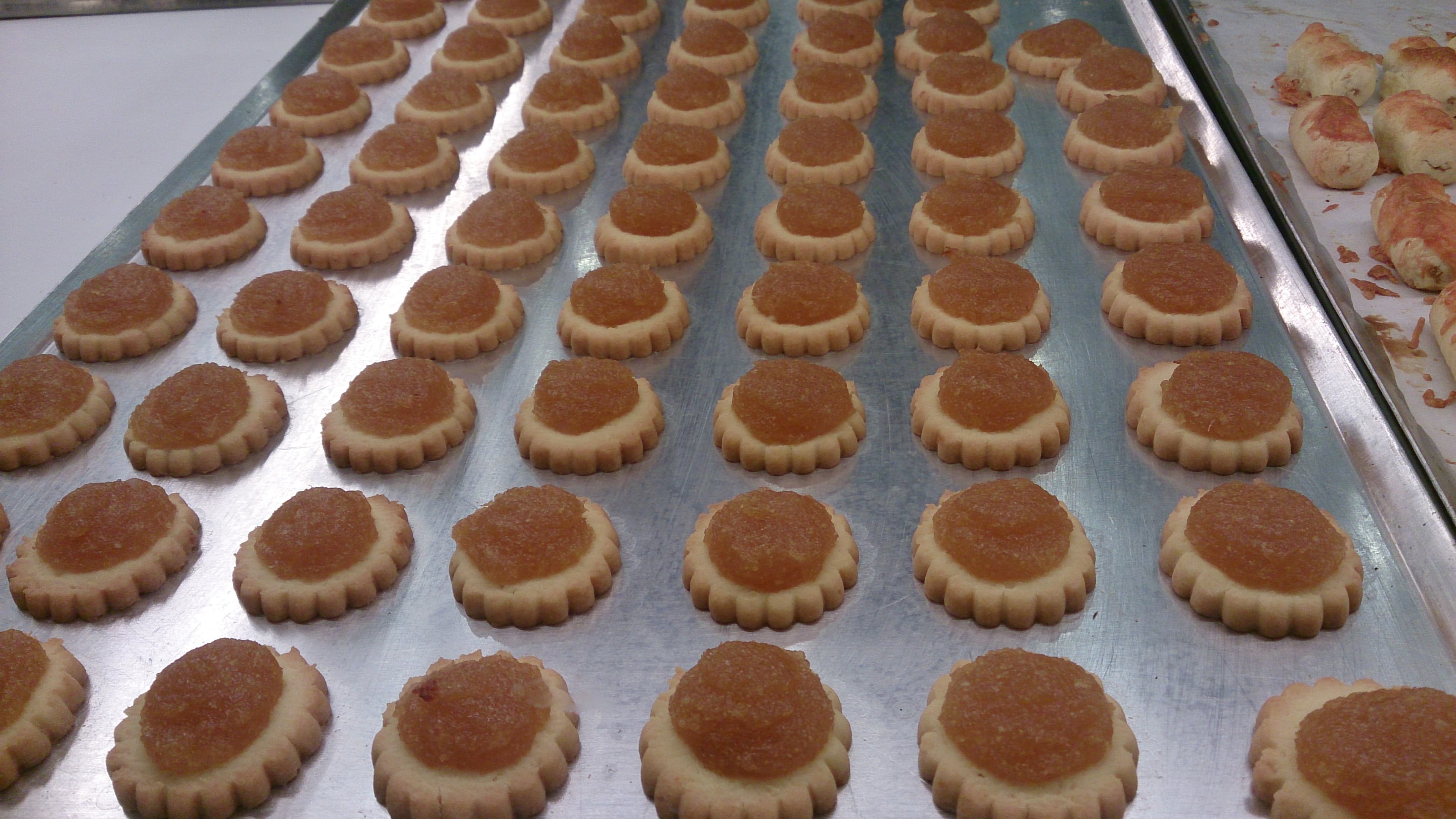
3. Pineapple tarts — the Lunar New Year classic
Pineapple tarts are buttery, melt-in-the-mouth pastries crowned with sticky pineapple jam. They appear by the tin every Lunar New Year, and there is a reason. Pineapple is “ong lai” in Hokkien, which sounds like “prosperity arriving” — so the tarts are edible good luck.

They also make a sensible souvenir. Freshly baked tarts keep for two to three weeks in an airtight tin, and commercially sealed boxes last longer still. Therefore they fly home easily — just keep them away from heat and humidity so the pastry stays flaky.
4. Killiney kopi & teh — a kopitiam in a sachet
Nothing says Singapore mornings like kopi. At the kopitiam you order in code: “O” means black (no milk), “C” means with evaporated milk, “kosong” means no sugar, “siew dai” means less sweet, and “peng” means iced. So a “kopi-o kosong” is simply black coffee, no sugar. Meanwhile “teh halia” is milk tea warmed with ginger.
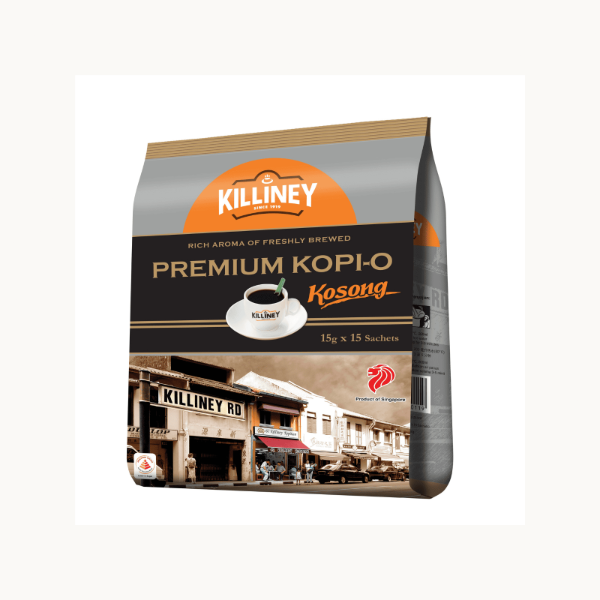
Killiney bottles that whole ritual into instant sachets, so you can brew the kopitiam at home. Choose the sugar-free Premium Kopi-O Kosong or the gentler Kopi-O Siew Dai (S$9.80), the creamy 3-in-1 Premium White Coffee (S$11.80), or, on the tea side, the Premium Milk Tea and the ginger-warmed Premium Teh Halia (S$14.80).
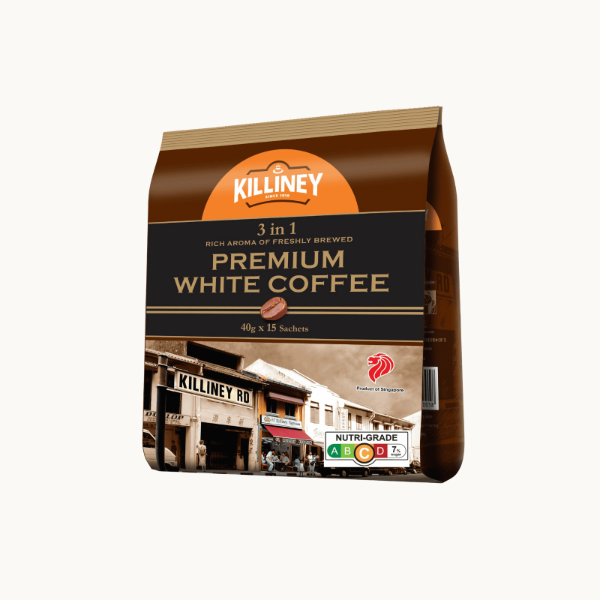
Because they are sealed and shelf-stable, these sachets are among the most reliable souvenirs on this list. Browse the full Singapore kopi collection for the complete kopitiam lineup, matcha latte included.
5. Hawker pastes — laksa, mee siam, mee rebus & curry
A jar of paste is how you smuggle a hawker stall into your kitchen — legally. These concentrates carry the hard part of the recipe: the rempah, the spice and the slow-built depth. As a result, a weeknight bowl of laksa stops being a fantasy.
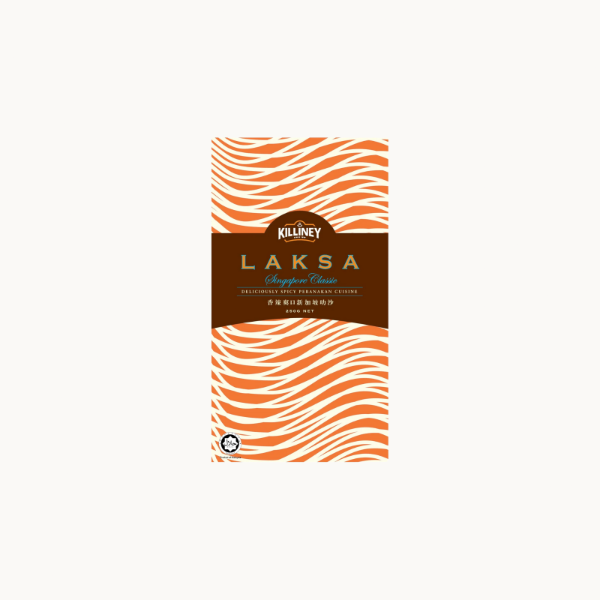
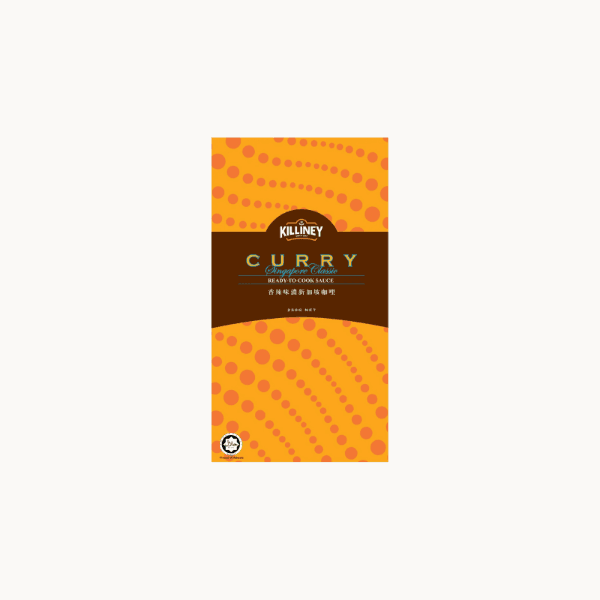
The Killiney pastes run S$8.80 each, and Killiney says one Laksa Paste pouch stretches to roughly 9–10 bowls. Prefer something tangier or sweeter? Try the Mee Siam, the Mee Rebus, or the all-purpose Curry Paste. Each one is sealed, light and customs-friendly.
6. Chilli crab & sambal sauces
Chilli crab is Singapore’s iconic seafood dish — mud crab tumbled in a sweet, savoury, slightly spicy tomato-chilli gravy thickened with egg. Home cook Cher Yam Tian created it around 1956, and chef Hooi Kok Wai refined it into the modern classic in the 1960s. Many Singaporeans call it a national-table dish, even though Hainanese chicken rice usually wears the “national dish” crown.

You will not fly a live crab home, of course. A bottled chilli-crab or sambal sauce, however, lets you recreate the gravy over prawns or fish in minutes. Pair it with a Killiney paste from the section above for a full Singaporean spread.
7. Salted egg yolk snacks
Salted egg yolk is Singapore’s most addictive flavour, and around 2015 it jumped from restaurant plates into snack bags. Brands like IRVINS and The Golden Duck led the craze, coating potato chips and crispy fish skin in that rich, grainy, faintly sweet gold dust. One tin rarely survives the journey to the gate.

As dry, sealed snacks, salted-egg chips travel well and make crowd-pleasing office gifts. Check the best-before date, and tuck the bags into your checked luggage so they do not get crushed.
8. Pandan chiffon cake
Light, springy and unmistakably green, pandan chiffon is the cake in every Singapore bakery window. Bengawan Solo, founded in 1979, popularised it so thoroughly that CNN later crowned pandan cake the “national cake” of Singapore and Malaysia. Its exact origin is debated, blending a Western chiffon technique with Southeast Asian pandan.

One honest caveat: fresh cake is best eaten within a few days. So buy it close to departure, or treat it as a holiday indulgence rather than a long-haul gift.
9. Dessert teas — chendol, cheng tng & pulut hitam in a mug
Singapore’s hawker desserts are famous, yet few people know you can now drink them. Local brand Tea Language reimagines kopitiam classics as instant tea blends, so a single mug brings back chendol, cheng tng or pulut hitam in minutes.
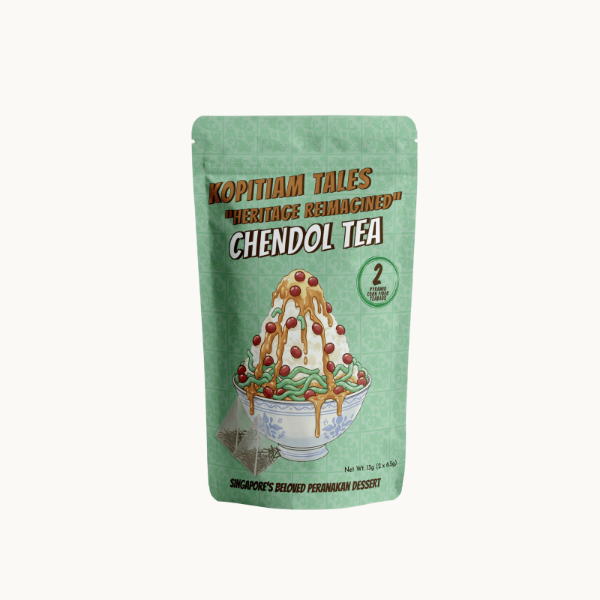
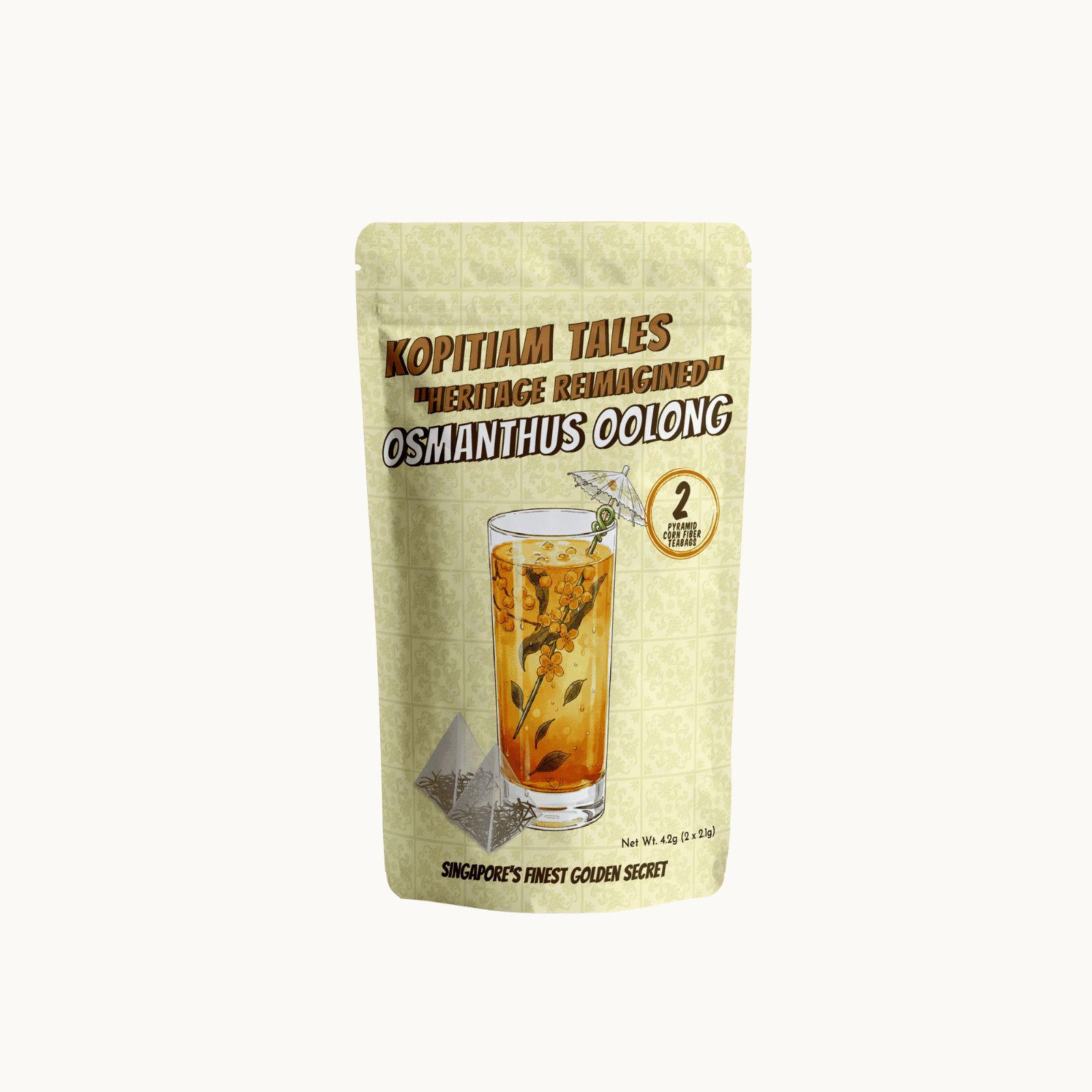
The dessert-tea sachets are just S$4.20 each — try Chendol, Cheng Tng or Pulut Hitam. For a lighter cup, the floral Osmanthus Oolong and a no-sugar Teh-O Kosong round out the dessert-teas collection. They are feather-light, which makes them ideal stocking fillers.
10. Durian treats — the thrill without the drama
Durian is the “king of fruits,” loved and feared in equal measure for its custardy flesh and powerful aroma. That aroma comes with rules, though. Singapore bars fresh durian from the MRT and public buses, airlines ban it from the cabin, and many hotels turn it away — staff will simply ask you to take it outside.

Happily, the souvenir version skips all that. Durian puffs, cookies, wafers and candies are shelf-stable, sealed and travel-friendly. So you get the flavour your friends will argue about, without smuggling a banned fruit through security.
11. Singapore Sling kit
The Singapore Sling is the city’s most famous drink, a blush-pink mix of gin, cherry liqueur and pineapple. Bartender Ngiam Tong Boon shook up the original around 1915 at the Long Bar of Raffles Hotel. More than a century later, it is still the cocktail every visitor wants to taste.

A ready-to-mix Sling kit or a bottle of the syrup lets you pour the ritual at home. Just remember the liquid rules: anything over 100ml belongs in your checked bag, not your carry-on.
12. Mooncakes & festive cookies
Singapore’s festival calendar bakes its own souvenirs. At the Mid-Autumn Festival, mooncakes arrive in lacquered boxes, their lotus-seed paste hiding one to four salted egg yolks that stand in for the full moon. Come Lunar New Year, the tins fill instead with love letters (kueh kapit), kueh bangkit and almond cookies.
These make especially thoughtful gifts because they are seasonal — you can only buy them at the right time of year. Boxed and sealed, most also survive the flight home without trouble.
Which Singapore food souvenirs clear customs? Border rules & shelf life
The fastest way to ruin a food souvenir is to have it confiscated. So before you shop, sort your picks into three simple buckets.
- Usually banned across borders. Pork bak kwa is prohibited in personal luggage into the US, EU and Australia — sealed or not. Fresh durian and other fresh meats and fruits are also high-risk. When in doubt, leave it out, and always declare any food you carry.
- Pack it in checked luggage. Kaya, bottled sauces and pastes count as liquids or gels, so jars larger than 100ml cannot go in your carry-on. Stow them below, cushion the glass, and bag anything that might leak.
- Carry-on friendly and long-lasting. Instant kopi and teh sachets, dessert-tea sachets, dry salted-egg snacks, durian pastries and sealed pineapple-tart tins are light, sturdy and shelf-stable for months. These are your safest gifts.
One more tip on shelf life. A sealed jar of kaya keeps for several months unopened, but refrigerate it once opened and finish it within a couple of weeks. Pineapple tarts hold two to three weeks in an airtight tin. Therefore, if you want maximum shelf life with minimum fuss, the sachets and sealed snacks win every time.
Where to buy authentic Singapore food souvenirs
Skip the airport kiosk — that is where prices climb the most. Locals shop differently. They pick up kaya, snacks and pastes at supermarkets like FairPrice and Cold Storage, raid the 24-hour Mustafa Centre in Little India for bulk gifts, and head straight to Chinatown or Katong for specialist bak kwa and kueh.

If your schedule is tight, Avendi does the legwork for you. The Singapore souvenirs page gathers food gifts from local makers in one place, at the maker’s own price, with same-day delivery to your hotel. Looking beyond food? The same makers also offer kueh-themed gifts and Peranakan keepsakes for friends who would rather keep their souvenir than eat it.
Frequently asked questions
What are the best Singapore food souvenirs to buy?
The most popular Singapore food souvenirs are kaya (coconut-egg jam), pineapple tarts, instant kopi and teh sachets, hawker pastes like laksa, and salted-egg snacks. Kaya, sachets and sealed tins are the safest picks because they are compact, shelf-stable and clearly Singaporean. They also survive a long flight without refrigeration.
What is kaya made of?
Kaya is a coconut jam made from coconut milk, eggs and sugar, slow-cooked into a soft custard. Most versions are scented with pandan leaves, which give Nyonya-style kaya its green colour. Despite being called a jam, it contains no fruit.
What is the difference between Hainanese and Nyonya kaya?
Hainanese kaya is brown and caramel-toned, because the sugar is caramelised first, giving a richer, toffee-like flavour. Nyonya (Peranakan) kaya is green and lighter, coloured and perfumed by pandan juice. Both share the same coconut-egg-sugar base, so the colour tells you the style.
How long does kaya last, and does it need refrigeration?
A sealed commercial jar of kaya keeps for several months in a cool, dry place, which makes it travel-friendly. Once opened, refrigerate it and use it within about one to two weeks. Always scoop with a clean, dry spoon to keep it fresh.
Can you bring bak kwa out of Singapore, into the US or Australia?
No. Bak kwa is a pork product, and the United States, the European Union and Australia all ban pork in personal luggage — even when it is vacuum-sealed and commercially labelled. Packs are routinely confiscated, and undeclared meat can lead to fines. You also cannot bring bak kwa from Malaysia into Singapore.
Can you take durian on a plane or the MRT?
Singapore bans fresh durian on its MRT and public buses because of the smell, and airlines do not allow it in the cabin. Many hotels prohibit it too. Durian pastries and packaged snacks, however, are perfectly fine to carry and travel home.
Can you pack kaya and sauces in hand luggage?
Spreads like kaya and bottled sauces count as liquids under airport security, so in carry-on they must be 100ml or less. Standard souvenir jars are larger than that, so pack them in your checked baggage, which has no liquid-size limit. Single-serve kaya sachets are the easy workaround for cabin bags.
What do the kopi and teh terms mean?
“Kopi” is coffee and “teh” is tea, ordered in local shorthand. “O” means black (no milk), “C” means with evaporated milk, “kosong” means no sugar, “siew dai” means less sweet, and “peng” means iced. So “kopi-o kosong” is black coffee with no sugar, and “teh halia” is tea with ginger.
Are Singapore food souvenirs halal?
Many are. Kaya, pineapple tarts, salted-egg snacks and instant kopi and teh come in halal-certified versions — look for the MUIS halal mark on the pack. Traditional pork bak kwa is not halal, though halal chicken or beef versions are widely sold.
What is the best Singapore food gift for Chinese New Year?
Bak kwa and pineapple tarts are the classic Lunar New Year pairing, alongside love letters and almond cookies. Because bak kwa rarely clears customs, a boxed assortment of pineapple tarts, kaya and kopi makes a safer gift to carry abroad. All three say “Singapore” in one bite.
Where do locals buy food souvenirs in Singapore?
Locals skip the pricey airport shops and buy at supermarkets like FairPrice and Cold Storage, at the 24-hour Mustafa Centre, and at specialist stores in Chinatown and Katong. For convenience, Avendi delivers maker-direct food souvenirs to your hotel the same day, at local prices.
The bottom line on Singapore food souvenirs
The best Singapore food souvenirs are the ones that carry a memory and still clear customs. So lean on kaya, kopi, dessert teas and hawker pastes — they are light, they last, and every purchase supports a local maker rather than a tourist-trap reseller.
Ready to pack your flavours? Browse Singapore food souvenirs on Avendi for same-day hotel delivery, and read our wider guide to what to buy in Singapore or how to avoid tourist-trap souvenir shops.
Image credits: Cover photo (pineapple tarts) — ProjectManhattan (CC BY-SA 3.0); bak kwa — Fumikas Sagisavas (CC0); pineapple tarts — Choo Yut Shing (CC BY 2.0); chilli crab — Dekcuf (CC BY-SA 2.0); salted egg yolk crab — Misaochan (CC BY 4.0); pandan chiffon cake — ProjectManhattan (CC BY-SA 3.0); durian — G.Mannaerts (CC BY-SA 4.0); Singapore Sling — James Cridland (CC BY 2.0); Maxwell Food Centre — Shoestring/Wikivoyage (CC BY-SA 1.0). All editorial photos via Wikimedia Commons; product images courtesy of the makers via Avendi.